Theresa:
Welcome back to Living the Good Life, everyone. Today we’re opening up a conversation about an idea that has entirely reshaped how millions of people talk about health, chronic illness, and daily survival. It’s a framework that is so widely adopted that it’s evolved into its own cultural identity.
And so today we are going to talk about spoon theory.
Robert:
It’s fascinating because if you spend any time in chronic illness circles online, you’ll see people calling themselves spoonies. But if you aren’t initiated, you’re probably asking, why spoons? Why not batteries, dollars, fuel gauges?
Theresa:
And to understand that, we have to go back to a diner in 2003. The concept was created by an essayist and advocate named Christine Miserandino. I hope I pronounced that right.
Christine was living with lupus, an autoimmune disease where your immune system attacks your healthy tissues like your joints, your skin, and your organs. She was sitting in a diner with a close friend who looked at her and asked what it actually felt like to have lupus. Not the clinical definition, but what it felt like to live with it day to day.
Robert:
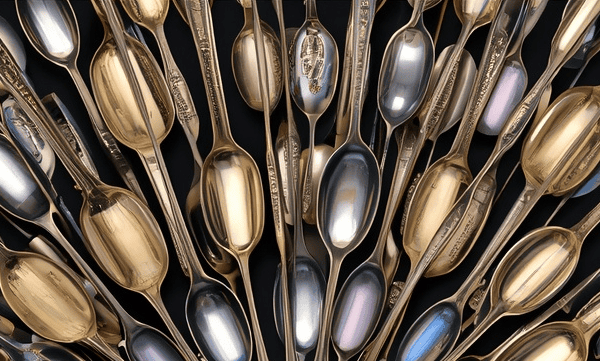
And that’s a notoriously hard thing to articulate. When you look healthy on the outside, people assume your internal battery works exactly like theirs. To demonstrate, Christine looked around the diner, grabbed every spoon she could find from the tables around, and handed them to her friend.
She handed her 12 spoons.
Theresa:
And she told her friend, this is your energy for the day. For a healthy person, energy feels virtually limitless. If you want to go to the store, you just go.
But for somebody with a chronic illness, every single action requires a choice. And every choice costs a physical asset. In this case, a spoon.
Robert:
Christine had her friend walk through a typical day. But right out of the gate, before her friend even got out of bed, Christine took a spoon away. Why?
Because her friend had woken up late, or slept poorly, or woke up in pain. Then, getting dressed, that’s another spoon. Taking a shower, that’s two spoons.
Because standing up in hot water causes dizziness. Before her friend had even left the house for work, half of her spoons were gone.
Theresa:
The epiphany for her friend came at the end of the simulated day. She realized that if she cooked dinner, she wouldn’t have enough spoons left to wash the dishes, or drive to see a friend. She had to learn the crushing reality of economic rationing applied to her own muscles, joints, and brain cells.
That’s the origin of the spoon theory. It wasn’t born in a laboratory. It was born out of a desperate need to make an invisible struggle visible to someone who loved her.
So now we’re going to talk a little about the science behind chronic fatigue and biology. So we’ll talk first about energy. Because spoon theory isn’t really about spoons, obviously.
It’s about the invisible cost of living in a body that doesn’t behave the way you want it to.
Robert:
Exactly. For people with chronic conditions, energy isn’t just feeling tired. It’s metabolic load.
It’s inflammation. It’s neurological processing. It’s pain management.
It’s sensory regulation. It’s executive function.
Theresa:
And the science backs this up. For example, chronic inflammation increases metabolic demand. Pain consumes cognitive resources.
Neurodivergent brains use more energy for sensory filtering. Autoimmune disorders cause fatigue through cytokine activity. Depression affects dopamine and motivation pathways.
Anxiety keeps the nervous system in a flight, in a fight or flight.
Robert:
So when someone says, I don’t have the spoons, they’re saying, my body is already working overtime just to exist. Now let’s pivot into the mechanics. While the metaphor uses silverware, the underlying reality is governed by absolute biology.
When someone says, I don’t have the spoons for that, they aren’t being lazy or unmotivated. Their cells are facing a literal energy crisis.
Theresa:
Exactly. Let’s look at the actual science of some body disruptions. For a long time, Western medicine dismissed conditions like fibromyalgia or chronic fatigue syndrome as psychological.
Today, we know better. The core of the problem often tracks down to three distinct biological systems. Cellular energy production, autonomic regulation, and neurological processing.
Robert:
Let’s break down cellular energy first. This centers heavily around mitochondrial dysfunction. The mitochondria are the powerhouses of our cells, responsible for converting food and oxygen into adenosine triphosphate or ATP.
In conditions like myalgic encephalomyelitis, commonly known as MECFS, studies show that the mitochondria do not cycle effectively. They produce significantly less ATP under stress.
Theresa:
And gosh, I remember in a physiology class learning about the Krebs cycle and how ATP worked and how it produced energy kind of from a long time ago. Anyway, think of it like this. A healthy person’s body can quickly ramp up ATP production when they jog or do chores.
Whereas, a person with mitochondrial dysfunction hits a hard ceiling. Push past that ceiling, their body shifts into anaerobic metabolism far too early, creating a buildup of lactic acid. And we know that often triggers pain and cramping.
For them, it triggers post-exertional malaise or PEM. And that is a severe crash where symptoms worsen 24 to 48 hours after minor physical or mental effort.
Robert:
Then you may have issues with the autonomic nervous system, specifically POTS or postural orthostatic tachycardia syndrome. In a healthy body, when you stand up, your blood vessels constrict automatically to pump blood upward against gravity to your brain.
Theresa:
But in a patient with POTS, that autonomic reflex fails. Blood pools in their lower extremities. To compensate and keep the brain conscious, the heart begins to race violently.
Just standing at a counter to brush your teeth can cause a POTS patient’s heart rate to shoot up to 130 or 150 beats per minute. That’s the cardiovascular equivalent of sprinting on a treadmill all while standing completely still. That burns through three spoons before you’ve even washed your face.
Robert:
We also have to address neuroimmune disruptions like fibromyalgia or lupus. In fibromyalgia, the central nervous system experiences a phenomenon called central sensitization. The brain amplifies sensory inputs.
A normal minor stimulus like the ambient noise of a grocery store or the physical sensation of sitting in an uncomfortable chair is processed by the brain as noxious or painful. The brain is constantly working on overdrive just to filter out the environment, draining mental spoons at an alarming rate.
Theresa:
Let’s talk about some real life examples of conditions where spoon theory is incredibly helpful. And let’s broaden this beyond the usual chronic illness list. Because energy limitations show up in many kinds of body disruptions, even when inflammation or autoimmune disease aren’t involved.
Robert:
One of the biggest factors is cognitive load. When your body or brain has to compensate for a disruption like vision loss, Parkinson’s, balance issues, chronic pain, or neuropathy, your brain is doing extra work. It’s processing more information, making more decisions, and running more background tasks.
Theresa:
Right. For example, people like me with vision loss, and I do this, often experience fatigue because my brain’s doing the job my eyes used to do. Every step becomes a conscious act of scanning, predicting, balancing, and staying alert.
That’s a huge cognitive load, which I didn’t realize was affecting my fatigue.
Robert:
Then there’s hypervigilance, which is huge for many disabilities. When you have to think about every step you take, your nervous system stays in a mild fight or flight state. That increases heart rate, muscle tension, cortisol, and glucose consumption.
You don’t need an autoimmune disease for that. You just need a body that’s working harder to stay safe.
Theresa:
People with Parkinson’s experience fatigue because the brain struggles with dopamine regulation. Dopamine is essential for movement initiation and coordination. When dopamine is low, the brain has to work harder to perform basic motor tasks.
That increased effort drains energy.
Robert:
For people undergoing prostate cancer treatment, fatigue can come from hormonal changes, sleep deprivation, pain, and the body’s healing process. For me, I recently completed, a few months ago, my prostate cancer treatment. My sleep is disrupted constantly, almost hourly, by hot flashes.
Even though I’m on certain medications that are supposed to alleviate it, my fatigue is just extreme from the hormonal suppression therapy that I had to go through. And it has been very, very challenging. And there are days when I run out of spoons by by midday, and I have to be very careful.
Theresa:
Then there are balance disorders. They’re another great example. When the vestibular system is compromised, the brain has to rely more heavily on proprioception and vision.
Thank God I had my balance disorder before I had the eye vision loss. So with balance disorders, it means that every movement requires conscious effort. It’s like walking on ice all the time.
Your brain never gets to relax.
Robert:
We also have pain physiology. Pain isn’t just a sensation, it’s a full body event. The nervous system fires signals, muscles tense, breathing changes, and the brain tries to interpret and manage the pain.
That uses cognitive resources and burns energy.
Theresa:
Then there’s executive dysfunction, especially with ADHD, autism, traumatic brain injury, and long COVID. Planning, organizing, starting tasks, switching tasks, all of it takes more energy. Neurodivergent brains use more glucose during executive tasks, which means they burn through spoons faster.
Robert:
We also see this in neuropathy, post-surgical recovery, arthritis, migraine disorders, and PTSD.
Theresa:
And finally, there’s sensory processing. For autistic people or people with sensory processing disorders, everyday environments can be overwhelming. Bright lights, loud noises, crowded spaces, the brain has to filter all that input.
That filtering process also uses energy.
Robert:
So when you put all of this together, cognitive load, hypervigilance, motor compensation, sensory processing, pain physiology, executive dysfunction, mitochondrial issues, you get a body that’s burning through spoons at a much faster rate than a healthy body.
Theresa:
And that’s why spoon theory resonates with so many. It’s not just a metaphor. It’s a simple way to describe a very complex reality.
And going over this, I’ve had a lot of these at some point in my life, and I feel like we’re now just some of those old people talk about their health issues. Well, it sounds like it. Okay, let’s talk about who regulates the spoon.
Talk about who regulates the spoons. Is it your health care provider? Is it you?
Is it someone you know? Who does that? So who are the professionals that actually treat this?
Don’t look under spoons in a phone book. Oh, there aren’t phone books anymore. Never mind.
If you go to a traditional physician, they might prescribe medications to manage individual symptoms, like immune suppressants for lupus, or beta blockers for POTS. But medication alone doesn’t teach you how to live within your biological budget.
Robert:
That’s where occupational therapists, or OTs, come in. OTs are the undisputed champions of clinical energy management. While physical therapists focus on building physical strength and movement, occupational therapists focus on function.
How you execute the occupations of daily life, which includes everything from bathing to working at a computer.
Theresa:
OTs don’t use the word spoons, obviously, in their peer-reviewed journals, but they use an identical evidence-based framework called energy conservation techniques. They teach patients the four P’s of energy conservation. They are 1.
Pacing alternating periods of activity with scheduled proactive rest breaks rather than working until you crash. 2. Planning scheduling high energy tasks across the week so they don’t pile up in one single day.
3. Prioritizing eliminating unnecessary steps in a task or outsourcing tasks that drain your vital resources. And then 4.
Positioning. They help you modify your physical environment to decrease physical strain, such as sitting on a stool while prepping vegetables or showering.
Robert:
OTs are joined by other specialized professionals. You have neuropsychologists who help patients manage the cognitive fatigue often called brain fog. Brain fog is a real neurological slowdown caused by neuroinflammation or reduced cerebral blood flow.
You also see functional medicine practitioners and specialized rheumatologists or neurologists who work collectively to map a patient’s baseline.
Theresa:
And let’s explicitly define the word baseline because it is vital. So in clinical terms, your baseline is the amount of activity you can engage in daily without triggering a flare-up or post-exertional crash. Finding your baseline is the prerequisite for figuring out exactly how many spoons you have to work with each day.
(Transcribed by TurboScribe..)