Theresa:Welcome back to Living the good Life. Today we are going to continue our discussion about why cruising is so wonderful for people with body disruptions. Hope you enjoyed the show.
Robert:
Let’s talk about that worst-case scenario. What if it’s more than just a flare-up? What if someone actually needs clinical intervention?
That’s reason number nine. Onboard advanced medical centers. These are not first aid stations with band-aids and ice packs.
Modern cruise ships have literal mini hospitals on the lower decks. They are staffed by international doctors and nurses, equipped with ICU level stabilization gear, x-ray machines, lab equipment for blood work, and cardiac monitors. If you have a chronic illness, knowing that life-saving medical care is literally under your feet, provides a level of psychological safety you cannot get at a remote beach resort.
Theresa:
Having said that, do be aware that these are not full hospitals, and you should always consult with a doctor before if you have a chronic condition, or especially if you have a terminal condition. There are people who want to do one last hurrah before, I guess, their expiration date comes up, like the next week, and they need to be evacuated from the ship. And I can tell you that does not always make your fellow passengers thrilled.
So please don’t put the other 3,000 or 6,000 or 900 passengers in a position they don’t want to be in. Just so you know, just in case you do have an accident or something serious happen, because it can happen at any time, there is a morgue on the ship, and they will take care of you. Which, at that point, you probably don’t really know.
It does completely lower your nervous system alarm bells to know that you have an option for medical care. And speaking of comfort, let’s add reason 10. Climate control autonomy.
Many people undergoing cancer treatments or dealing with thyroid disruptions. Oh, do I get to add that to my list too? Great.
They can experience extreme sudden shifts in body temperature. And I will say that also happens with menopause. So we don’t want to not talk about the women who travel and might have that condition.
Oh, in a hotel, the central air can be controlled by a hotel. Cruise ships have individual digital thermostats, and I do want to be honest that sometimes they are set too warm for me. And you can ask to have those adjusted.
If you get a sudden chill or a massive hot flash, you can change your immediate environment in seconds. And I’m one who likes to keep the thermostat at meat-locker temperature.
Robert:
It’s all about control over your environment, isn’t it? Which brings us perfectly to our next category. Neurodivergence, sensory perception disruptions, and cognitive fatigue.
Which many people call brain fog. A giant ship can look loud and overwhelming from the outside, but structurally it offers something unique. Reason number 11, low sensory zones and certified ship.
Theresa:
And definitely more cruise lines are paying attention to this and some are certified for sensory considerations. And even the kids programs might have something for low sensory experiences. And as I mentioned before, the newer ships have more of these options and they’re getting better and better about accommodating people with body disruptions.
So there is an organization called Autism on the Seas and cruise lines that partner with Culture City. So as I mentioned, many modern ships are officially certified sensory inclusive and some of the staff is trained in how to handle sensory activities and neurodivergent people, etc. So they could offer things like noise cancelling headphones, strobe reduction glasses, which that’s a good thing to have if you have something like migraines or if it might cause a seizure.
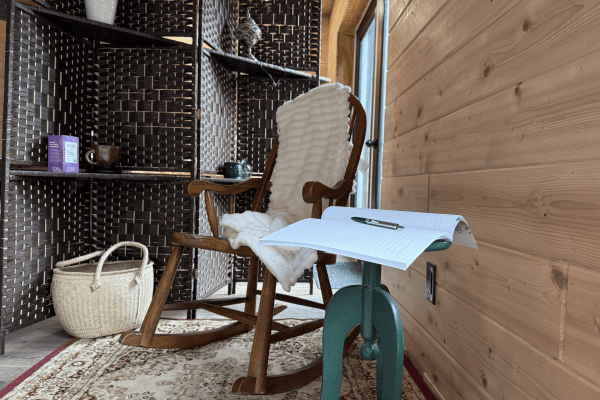
That would be a good thing to ask for and you may already have your own. For more nervous or hyperkinetic people, they have fidget tools. But most importantly they designate specific areas of the ship as permanent low sensory zones.
You just need to be sure that other people respect that zone. So they have quiet lounges or solariums where music is banned and lighting is dimmed.
Robert:
And for people dealing with cognitive fatigue, early-stage dementia, or visual impairments, Reason 12 is huge. They’re predictable layouts. When you travel overland, every day is a new visual puzzle.
A new hotel lobby, a new street grid, a new train station. It’s exhausting for the brain. A cruise ship is an enclosed predictable grid.
Within 24 hours your brain maps it out. State rooms are in the middle, restaurants are aft, entertainment is forward. Once you learn that geometry, the mental tacks of navigating evaporate.
Theresa:
That’s important for people who might suffer from fatigue. Ask your travel advisor for recommendations. And if you’re lucky enough to find somebody who specializes in cruising for the disability community, you’re in luck.
Maybe you want a state room near an elevator. Oh, be sure to check the deck plan before you go. Then you can get a good idea of the layout of the cruise ship.
So for those with specific visual or hearing disruptions, Reason 13 is the integration of assistive visual and auditory technologies. From Braille signage on every cabin door, an elevator button, to closed captioning on state room TVs, and safety briefings, to infrared assistive listening devices in the theaters, the compliance with accessibility standards is incredibly high. Some lines even have designated built-in relief areas with real grass for service animals.
And if you happen to need a sign language interpreter, you can also find that. Ask your travel advisor because that’s something that needs to be requested well in advance of the sailing date.
Robert:
That attention to detail is remarkable. Now, let’s talk about Reason 14, which is one of my personal favorites. Packing and energy autonomy.
I call this the FOMO cure. When you’re at a traditional land destination, if the rest of your travel group goes off to see a landmark and you have to stay back in the hotel room because your energy is depleted, you feel left out. You look at a blank wall.
On a cruise, if you need to rest, you can lie on your cabin bed or sit on your private balcony and you are still looking at the ocean. You are still experiencing the movement. You can see the islands passing by.
You are in the travel experience, even while resting your body.
Theresa:
Oh, and another tip is when everybody is going out and exploring on shore, it’s the perfect time to go sit by the pool or find a quiet place that doesn’t stress you out because of the noise. You can go relax and have the space. Mostly to yourself.
You don’t have to worry about finding a chair or finding a comfortable spot. Do those things that make you feel frazzled when everybody’s off the ship. It’s like your own personal yacht, or kind of.
So it is so true that you can get that FOMO, especially if that was the way you used to travel. I would say that was me for sure and it’s still hard to change that because it’s real. But to be safe, to not fatigue myself, I have to cut back.
Same with Robert. He’s cut back. It’s harsh, but it’s better for us to do that.
That all leads to reason 15, the built-in escape hatch. If you decide to push your limits, say you go to the high-energy evening Broadway show or the lively main dining room and midway through your body says, we’re done. The battery’s at zero.
You don’t have to call for an Uber, wait for a valet, or walk a mile down a city street, although some walking can be pretty far on a ship. You step out the door, walk to the elevator, and in a few minutes you are back your quiet, dark, safe room. You can brave environments that you might normally avoid because you have an escape option.
It’s close. It’s reliable. Most ships do have separate wheelchairs and you could call somebody, ask your waiter, and they will come with the wheelchair to assist you.
It’s not for your use on the entire cruise, but it is to help you navigate.
Robert:
We’re entering our homestretch here, and I want to focus on chronic pain, aging bodies, and oncology. People undergoing or recovering from intense medical treatments like cancer therapy. Reason 16 is something that offers relief.
Hydrotherapy and thermal sweets.
Theresa:
Oh, those thermal sweets are heaven. If you have rheumatoid arthritis, fibromyalgia, or you’re managing stiffness from an old bone replacement, gravity is your enemy. Cruise ship spas almost always feature thermal sweets.
In fact, you can book a spa category of stateroom that gives you access to the spa. It’s another thing to ask your travel advisor. They also have specialized treatments.
They might have a whirlpool, a jet stream pool, ice pool, massage, and all those other types of treatments or amenities like the heated lounger. It’s a good place to relax, and again, it’s nice to go there when everyone’s off the ship.
Robert:
And getting down to those spas or up to the pool decks doesn’t require a hike, thanks to reason 17. An abundance of elevators. On land, a lot of historic hotels might have one tiny elevator that fits two people, or a resort might require walking up long, sweeping outdoor staircases.
Cruise ships are designed around massive vertical elevator banks. If you have a bone replacement or severe joint degradation, you can completely bypass stairs for the entire vacation. Every single floor is equally accessible.
Theresa:
Another tip, if you have fatigue or your joints or bones hurt, request a stateroom near the elevator, so you can just walk right around the corner from your stateroom. So let’s talk about reason 18, which is incredibly sensitive and important. Cancer-safe pampering.
For a long time, people undergoing active cancer treatments were turned away from traditional day spas because massage therapists weren’t trained in the nuances of oncology, like managing compromised lymph nodes or fragile skin. Today, most major cruise line spa providers train their staff in certified oncology, massage, and skin treatments. It allows someone who’s been po-prod-ed, po-prod-ed and treated like a clinical medical guinea pig for months, to safely experience human touch and pampering again.
And keep in mind, you can find, or if you don’t find it, ask your travel advisor to let you know which kind of treatments are available in the spa.
Robert:
That’s comforting to know. And keeping those same individuals safe is reason 19, rigorous hydration and sanitation standard. If you are immunocompromised, the world feels full of pathogens.
But cruise ships, especially after the public health overhauls of the last decade, are hyper-vigilant. There are hand-washing stations at every restaurant entrance, continuous air filtration upgrades, and constant visible sanitation of high-touch surfaces. Furthermore, you have immediate guaranteed access to clean water and food prepared under strict public health regulations.
It minimizes the risk environments.
Theresa:
And although the government has taken off some of the restrictions for the sanitary ratings of ships, cruise lines continue to test. It just makes sense for them. So finally, reason 20.
It’s not a structural feature or a medical protocol. It’s a cultural one. When you have a visible body disruption, whether you’re walking with a cane, using a wheelchair, wearing a visible ostomy bag at the pool, or dealing with a prominent tremor, or rocking a bald head from chemotherapy…
Robert:
Tell me what you mean by that.
Theresa:
Well, the group is diverse. They come from all over the world, all over the country, and whether you’re walking with a cane… I know I was on a ship and somebody came up to me.
They offered to help me. They offered me their cane to get around, and people can be very, very helpful. So there you’ll see bodies of every shape, age, size, and ability level navigating the decks.
There’s maybe more of a normalization, not that you should really normalize a disability, but there’s an acceptance of different types of disabilities and health management. You aren’t the sick person or the disabled guy on the deck because there’s another one who is. You’re just another passenger heading to the buffet or waiting for the show to start.
Robert:
That sense of belonging might actually be one of the most therapeutic benefits of all.
Theresa:
I think it is. When your body feels disrupted, finding a place where you can just be you without explaining yourself or fighting the architecture is a true vacation. But having said that, don’t be offended or insulted if somebody asks you if they can help or what your disability is.
I wear an eye patch and people will assume that I have one disability and they will ask, and they’re always polite. So don’t just brush them off.
Robert:
Well, that’s our 20 reasons. If you’ve been hesitant to travel because you feel like your body can’t handle the logistics of the world right now, we highly encourage you to look at a cruise. Start small, maybe a three-night weekend itinerary, and see how the environment treats you.
Theresa:
And that’s a good idea if you are traveling with a disrupted body. But in general, I would like to say the shorter the cruise, the more party the atmosphere is. So keep that in mind.
And of course, it depends on our cruise line. A three-day cruise on Holland Americas, that is likely to be the big party weekend. Although I will say that people of all ages party.
But their prime reason is to get away, not to just party hardy for the next three days. As always, we’ll put links to some of the cruising resources we mentioned, like dialysis at sea and places where you could rent a wheelchair or oxygen or other equipment that you may not like to travel with on the airplane or just on your trip to the port. They’ll all be in the show notes.
Robert:
Until next time, keep living the good life and travel on your own terms.
Theresa:
Bye everyone. See you next week.
(Transcribed by TurboScribe.)