Robert:
Welcome back to Living the Good Life, where we explore real-world travel for real bodies. Adventures that are meaningful, doable, and full of wonder. I’m Robert.
Theresa:
And I’m Theresa. Today, we’re diving into a topic that affects millions of families but often doesn’t get nearly enough airtime, and that is caregiving for someone who’s recently become disabled.
Robert:
Whether the disability comes from an accident, an illness, or a sudden change in mobility, the early months are intense for the person adapting and for the caregiver learning a whole new world.
Theresa:
So today, we’re going to talk about that. I think we’re both experts on the subject, at least for my type of disability, which is a hidden one, but we will talk about practical stuff like ADLs, which are activities of daily living, and also the emotional and logistical challenges. And that includes for travel because that’s what we are concentrating on.
And yes, we will absolutely talk about spoon theory, which is something we learned about researching for this podcast. First, I think it was personal care. I had to look at everything carefully.
I have been pretty independent, traveled solo a lot of my life, and assume that I could still travel without a caregiver. That pretty much was a disaster. And it’s not good when you have flight changes or you can’t see well enough to see if your flight has changed or where the gate is.
Fortunately, when that happened, I did have the app, but I just wanted to reconfirm so they didn’t have to walk all the way to a gate that might be the correct gate. Because walking through an airport is like walking through an obstacle course. There’s too many people.
There’s too many distractions. It’s hard to see. Because I have an invisible disability, people don’t see.
They don’t see me from behind. I don’t believe one of those times that I was wearing an eye patch because I thought that was only for driving. And I guess that’s true because that’s true because I was on a group tour and people asked others why it was taking so long to walk on ice or why it was so slow.
And that’s because I had to check out everything because I don’t have depth perception. I don’t have peripheral vision. So then that’s when Robert became my caregiver and I’m lucky to have somebody who helps me.
I had to change routines. You know, he reminded me to put my glasses on when I was going out or grab a patch. He also had to understand my ADLs.
Now everything takes me at least twice as long getting dressed, brushing my teeth, using the bathroom, going outside. All of that took extra time.
Robert:
And these are the ADLs Theresa’s talking about. Things like bathing, dressing, eating, toileting, transferring and mobility.
Theresa:
And fortunately for me, a lot of those things I can do myself with extra time. I don’t cook anymore. I turn on the wrong burner and I’m afraid of burning the house down.
I don’t use knives.
Robert:
Yes, you definitely don’t use knives.
Theresa:
No, but sometimes I’ve cheated if I’m really careful. Because when you’re not here, but I cut a piece of cheese and that’s about it. And I’m very, very careful and it’s scary.
But for me, I didn’t grow up with this vision loss. And when it happens suddenly, you’re not independent anymore. You can’t drive anymore.
You can’t do anything. You figure out how you want to get help. But on the same hand, for me, because I’ve been dependent, I feel ashamed of my disability and guilty having to ask people for help because it’s so opposite of how I lived before.
And I guess part of that is, do I need equipment? And I did get a cane because I have no depth perception. Stairs are very difficult.
They can look just like a boardwalk and a boardwalk can look like stairs. And then I can get, you know, I’m suddenly frightened in out of it. I have to decide what’s safe.
I have to preserve dignity. And even though my disability is mostly invisible, when I wear a patch, people stare, look at me funny. I know one time there was maybe, I’d say, a 12 or 13 year old just staring at me as he walked out into the parking lot from a store, which I don’t usually go to anymore.
But he crashed into a light pole. And because I’m mean, I guess I thought, that’s what he gets. Like, don’t stare at me.
And at least I’m outside.
Robert:
And then there are the rude people who will pass by and say, Arrrrgh.
Theresa:
Oh yeah. I’ve had, because I wear a patch, but for me, the thing to do is say, hey, matey. And don’t let them, I mean, I would never consider saying that to somebody unless it was an actual pirate that I would run.
But yeah, sometimes there’s new things I had to get used to.
Robert:
And there’s been a huge emotional adjustment for both of us. And that’s true for both the caregiver and the person who has that sudden body disruption.
Theresa:
Yeah, definitely is, like I said, I didn’t think I needed anyone to take care of me and it makes me feel guilty and dependent, which I just don’t like that. Like I said, I’m very lucky because Robert has taken care of me and he’s really good. I think if you don’t have the disability, sometimes it’s hard to understand.
Like even for me, without being able to see, there’s things I have to look at everything now and it’s exhausting. So Robert tries to model and pretend that he can’t see either. So he knows what might be hazardous to me.
And it can be exhausting for a caregiver as well, because it’s just a totally different way of living.
Robert:
And that exhaustion can lead us right into spoon theory and energy management. So let’s talk about spoon theory. It’s one of the most helpful frameworks for understanding energy limits.
Theresa:
And we found out about this while researching topics for this. I had never heard of spoon theory until a month ago, and it really does make sense. We did another podcast totally on spoon theory, so you might want to go back and check that out.
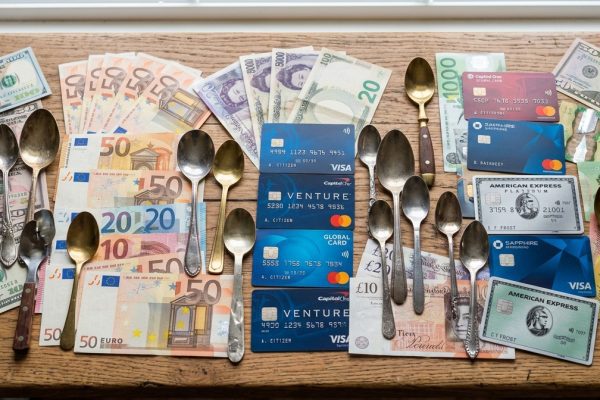
That theory came from Christine Miserandino, who has a disability and she was trying to explain to a friend how much energy it took. So the idea is pretty simple. You imagine you start each day with a limited number of spoons, but everything you do, whether it’s big or small, costs you a spoon.
When you run out, you’re done. And that doesn’t matter on how much you want to keep going. And that’s something very difficult, I think, for many, especially if you were active.
I mean, I used to ride my bike and I know it’s not a long distance, but I used to ride my bike just as a workout, ride it hard 10 miles a day. Hard for me now would be to pedal once and hope I didn’t run into a tree or something so I could still actually pedal a bike. But I can’t see where I’m going.
That makes it difficult and that takes up lots of energy. So no sentry rides for me anymore.
Robert:
And that’s certainly true for someone who’s recently disabled. Their spoons may be drastically fewer than they had before.
Theresa:
And the same thing is true for somebody going through cancer treatments like Robert. And he always thinks he has the energy of a 20 year old anyway.
Robert:
But I feel like I’m 19.
Theresa:
Oh, you’re down to 19 now?
Robert:
Yeah, yeah. But I had my radiation treatment and some other therapies. And one of the side effects of all that was extreme fatigue.
And it wasn’t just for a few days, it’s it can be for months or even years for some people. And I think I’m slowly starting to get out of it now. But I really do wake up in the morning with a limited number of spoons.
And if I push myself too hard during the day and I’m starting to borrow spoons from the next day, I’m going to crash that next day. And it’s going to take me a longer time to recover.
Theresa:
And that’s true when you think you can keep going because you have to remember you have a limited number of spoons, no matter how many you had in the past and could go on and on and on. You really have to evaluate your personal situation. And you could run out of spoons just by getting up and taking a shower.
And those things, when you change, instead of taking one spoon, as in the past, they could now take three spoons and getting dressed might cost two spoons. I know for me, getting dressed, I used to be one who could be ready for the day in about five minutes. Now I’d say it’s 15 or 20.
I have to see if I’m looking at a pair of pants or a shirt. That’s something that I could work on. But I haven’t gotten to that point, you know, to put shirts over here and the different colors and be better about sorting it out.
And then going to the doctor’s, that’s not fun, interferes with Robert’s schedule. So there’s another reason to feel guilty that, you know, I’m cutting in to his day when we’re both low on spoons. We make it work out.
Robert:
And you have to be considerate. So instead of saying something like, let’s run some errands after your appointment, you should be asking, will you have spoons left for running some errands?
Theresa:
And I usually like stopping and running errands. Sometimes I’m pretty good at doing it. It depends on what the errand is.
I often find myself just sitting in the car while Robert goes into the grocery store. I think it’s probably saved us a lot of money because I’m one who likes to look at the clearance rack or look at a different kind of food or think of something different for dinner. It’s difficult navigating the store if I do go, which occasionally I do just to do something.
I hold on to the cart. Sometimes Robert will park me somewhere. I have to say, even if I’m parked in a corner, invariably there’s somebody coming right at me and it’s like, I’m out of the way.
You know, I’m like, give me a dirty look. It’s like, but I moved way over. You know, it’s like if I pulled off the side of the road, they still want to come and crash into me.
But I think there is some psychological thing about crashing into things or those things attracting you. And then because of my disability, or I actually am not disabled, so maybe I’m one of those fake people, I am impaired, which I can’t drive. I have no independence, but until I’m almost totally blind, I am not considered disabled.
But I’ve been watching a lot of people with disabilities who said, if you think you’re disabled, you are. I mean, you know yourself best. And I would I don’t know who comes up with requirements, but I would like them to see if they’d still consider this an impairment if they experience the same.
But I guess it’s neither here nor there. But that means if we park far away, I have more chances of getting hit by a car I didn’t see. That happens whether you can see or not.
Parking lots can be crazy, but I cannot get the little blue tag that you put on your car to park close to the store. Maybe somebody will come up with impairment parking spots and I’d be the only one who had the tag.
Robert:
Let’s go deeper into ADLs. What does supporting ADLs look like day to day?
Theresa:
It’s a mix of routine and flexibility. For example, maybe bathing or showering requires grab bars, which we have all of them ready to be installed in our house or a handheld showerhead. If you’ve listened before, you know, we recently built a house during part of that is when I lost all my vision.
So we’ve made some adjustments. We have a shower with a handheld and a rain shower in it. The bathroom’s made to fit a wheelchair if that’s ever necessary.
Robert:
All of our doors are now wide enough. They’re 36 inch doors.
Theresa:
Right. All of our doors are 36 inch doors. And we just plan that just in case, hoping we never need to use some of the things like a grab bar.
A shower is good for anybody, whether you have a disability or not.
Robert:
And we have the curbless shower, too, so there’s no step up.
Theresa:
Right. And we have, you know, those really tall bathtubs look really nice, but I’m a shorter person getting in and out of them is not fun. Oh, so, you know, maybe if you have other disabilities, say you can’t use your hands very well, you might need adaptive clothing or magnetic closures, wide leg pants, slip on shoes.
And I think there’s a lot more that can be done with things like adaptable clothing.
Robert:
One of the ADLs could be transferring, and that’s moving from bed to wheelchair or wheelchair to car. And it often requires a safe, manageable technique.
Theresa:
Right. And you don’t automatically learn that. You have to practice and see how the person that you’re helping feels and what works best for them.
And caregivers, they learn safe transfer methods, but it’s a technique. And I honestly don’t know if there’s anybody who provides maybe an occupational therapist. I’m not sure.
I’ll have to check out to see if they’ll come to your house and give you instructions on how to best transfer.
Robert:
And these mobility opportunities help to support autonomy and that independence looks different for everyone.
Theresa:
Right. And independence does look different for everybody. And some people will think, oh, you know, if you’re in a wheelchair, you can’t walk, but maybe you can.
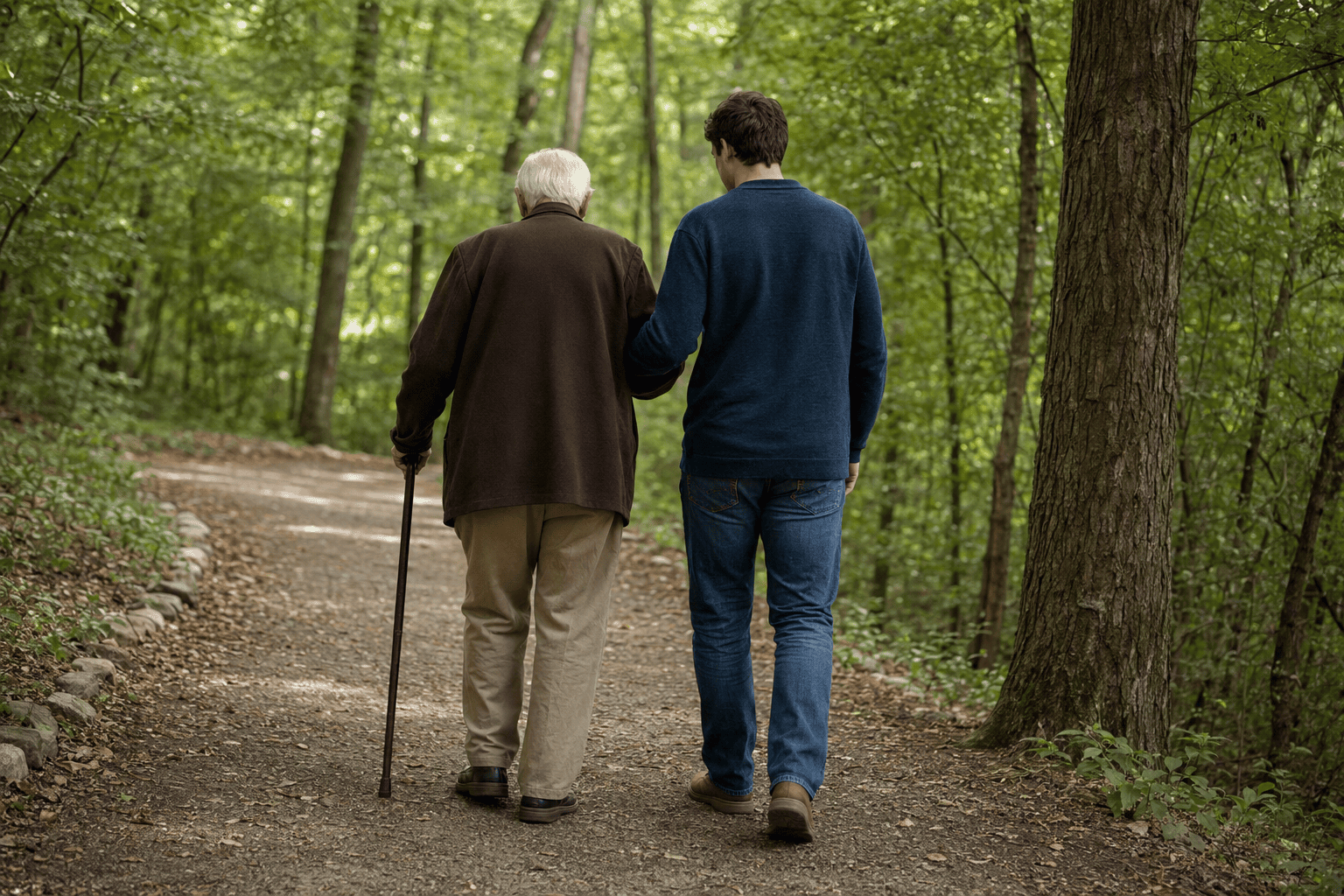
Maybe you can only walk a certain distance or maybe you need to take rest breaks. You know, you may be able to walk so far without your wheelchair or with a cane or with somebody holding on to you like Robert always holds my hand when we walk. Sometimes I think I might look like a hostage when he grabs my arm, but nobody’s called the police yet.
Back to what we’re talking about, sometimes brushing your teeth is difficult because of the height of the sink or how far you have to reach to turn on the faucet. Maybe holding the toothbrush is difficult. So there’s a lot of things that you have to consider and people want to maximize what they can do.
Robert:
And you want to try and minimize burnout for the caregiver.
Theresa:
Right. Because caregivers have their spoon limits, too.
Robert:
Let’s talk about travel logistics. Travel is a huge topic. When someone becomes disabled, travel can feel impossible, but it doesn’t have to.
Theresa:
Right. Not at all. It just requires a lot of planning, flexibility, patience and often a sense of humor.
Robert:
Let’s break it down. What’s the first step?
Theresa:
Well, first step is assessing needs. Do you need mobility aids, medications, bathroom access, rest breaks and your energy level? You know, are you sensitive to sounds or temperature?
You should all write that down before planning. You’re actually building a separate travel version of your ADLs.
Robert:
And transportation?
Theresa:
If you’re driving, you may already know how to transfer safely. If I know that there’s accessible parking and how long you can sit comfortably. If you’re flying, you’re dealing with TSA, boarding assistants, aisle chairs, accessible seating, pre-boarding.
Be sure when you book your ticket to go to the airline’s website and request any special equipment or assistance that you need. Like I always get the wheelchair just for my safety.
Robert:
Hotels are another big one.
Theresa:
Accessible room that can be just that it meets a minimal ADA compliance. Which could be there’s a grab bar in the extra high tub or there’s one near the toilet. So we talked about some of these before.
Think ahead. About what you need specifically and call the hotel. And I can tell you that a lot of people who work at hotels, they have not been in every room.
And there are some hotels, we’ll say like the Grand Hotel, Mackinac Island. We were at the Ritz Carlton in Cleveland. Every room is different.
So if you have a specific style room, just ask if they can check and verify, maybe even send you photos. So some of the other things you can ask, is the shower a roll in or a step in? Does it have a chair?
Are the beds at standard height? Is there enough room to maneuver your wheelchair and store it? Are the doorways wide enough?
Robert:
And then there’s pacing.
Theresa:
Travel days require spoon budgeting for sure. Everybody knows that travel is not easy. Although I’ve heard of people who’ve traveled millions of times, they’ve never had a delayed or canceled flight, which amazes me.
It’s better to be prepared. So build in some rest time, stay flexible and be happy with the small wins, like finding a great accessible place to eat or navigating a new city without stress.
Robert:
Travel becomes slower, but richer.
Theresa:
Exactly. It’s all about presence, not speed. As a formal fear of missing out person, or maybe I still am, but I can’t do that anymore, it’s been difficult to cut my itinerary in half or take a rest or just say I’ve run out of spoons and, you know, go get a rest.
Robert:
Now let’s talk about the emotional side for both people.
Theresa:
Caregivers often feel guilt, exhaustion or fear of messing up, as do the person being cared for and who can feel grief, frustration or loss of independence. Spoon theory helps, but you still need to remember that communication is everything.
Robert:
And humor.
Theresa:
Yes, sometimes laughing together can be the best medicine. And so celebrating progress, no matter how small, even looking at what you did accomplish.
Robert:
If you’re a caregiver for someone who’s recently disabled, you’re doing one of the hardest and most meaningful jobs in the world.
Theresa:
Exactly. It’s so difficult. And if you’re adapting to a new disability, your resilience is extraordinary.
Not by choice, but just by if you want to keep living, you have to learn to be resilient and flexible, which is easier said than done. You’re learning a new body, a new rhythm and a new way of moving around the world.
Robert:
Ideals, spoon theory, travel logistics, travel logistics, they’re tools, they’re tools. But the heart of caregiving is partnership.
Theresa:
And a partnership is built one day, one spoon and one victory at a time. I’ve added a caregiver checklist in the show notes. And next time, we’re going to talk about how to choose a caregiver and also how to know if you want to be a caregiver for somebody.
Robert:
Thanks for joining us on Living the Good Life. We’ll see you next time. We’ll see you next time.
(Transcribed by TurboScribe. Go Unlimited to remove this message.)