Theresa:
Welcome back to Living the Could Life. Real travel for real bodies. If your body changed before you were ready, but you still want to see the world, this is the place for you.
We talk accessibility, mobility, energy, and joy, because traveling isn’t over. It’s just different. There’s still so much travel you can do.
I’m Robert.
Theresa:
And I’m Theresa. Today we’re diving into a topic that so many people ask about. How to budget a trip?
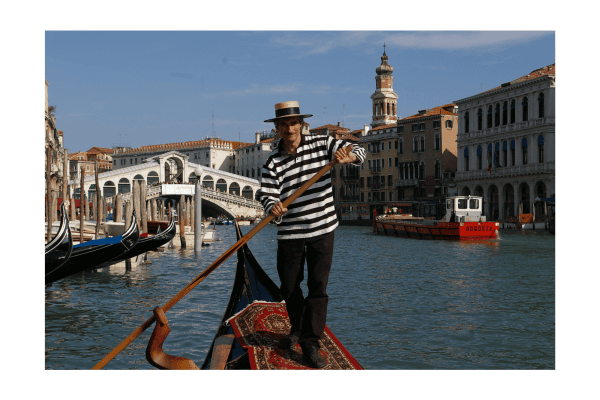
And we’re letting you follow along with an upcoming trip to Italy that we’re planning. But how do you budget it, especially when you’re navigating later-in-life disabilities?
Theresa:
We’re talking hidden costs, spoon theory as a budgeting tool, essential documents, all the money-saving strategies that make travel doable, joyful, and sustainable.
Theresa:
So let’s start at the very beginning. That’s with planning, because budgeting doesn’t necessarily start with just money. It starts with information.
Theresa:
Before you spend a dollar, you need your documents in order. For Italy, the basics are passport, travel insurance, and we’ll talk about why this is crucial, medical summary from your doctor, medication list with generic names, copies of prescriptions, emergency contacts, accessibility documentation, if you use mobility aids or need assistance, credit card travel notices, and backup digital copies stored in your phone and
Theresa:
another thing I like to add to that list, or should have added, are apps that you can use in planning, like to the Italy government, to see what they need. There is a new document that they’ve been trying to implement in the EU, but you should be safe at least until the end of this year.
You won’t need to have that document. It’s pretty much a verification. So I do want to emphasize that documents aren’t just for emergencies.
We kind of go by the saying, if you pack it, you hopefully don’t need it, but don’t go without it. So one thing is airport assistance, and usually you can request that when you’re booking a ticket, and that’s not only mobility assistance, but also for those with hearing or visual problems, and if you have any dietary needs. If you’re seated or flying with an airline that actually gives you any kind of food or food service on the flight, there’s hotel accessibility requests.
Often there are a few accessible rooms in a lodging place. And then you may have to visit a pharmacy, so have your prescription. You may need to have any of your mobility aids repaired.
You may want to have a copy of your insurance with you to file claims, or at least to get in touch with them to see if something’s covered, or how to go through a procedure to be sure it’s covered. So all of that reduces stress, which comes to your budgeting of spoons. It’s just as important as budgeting money, maybe even more so.
Theresa:
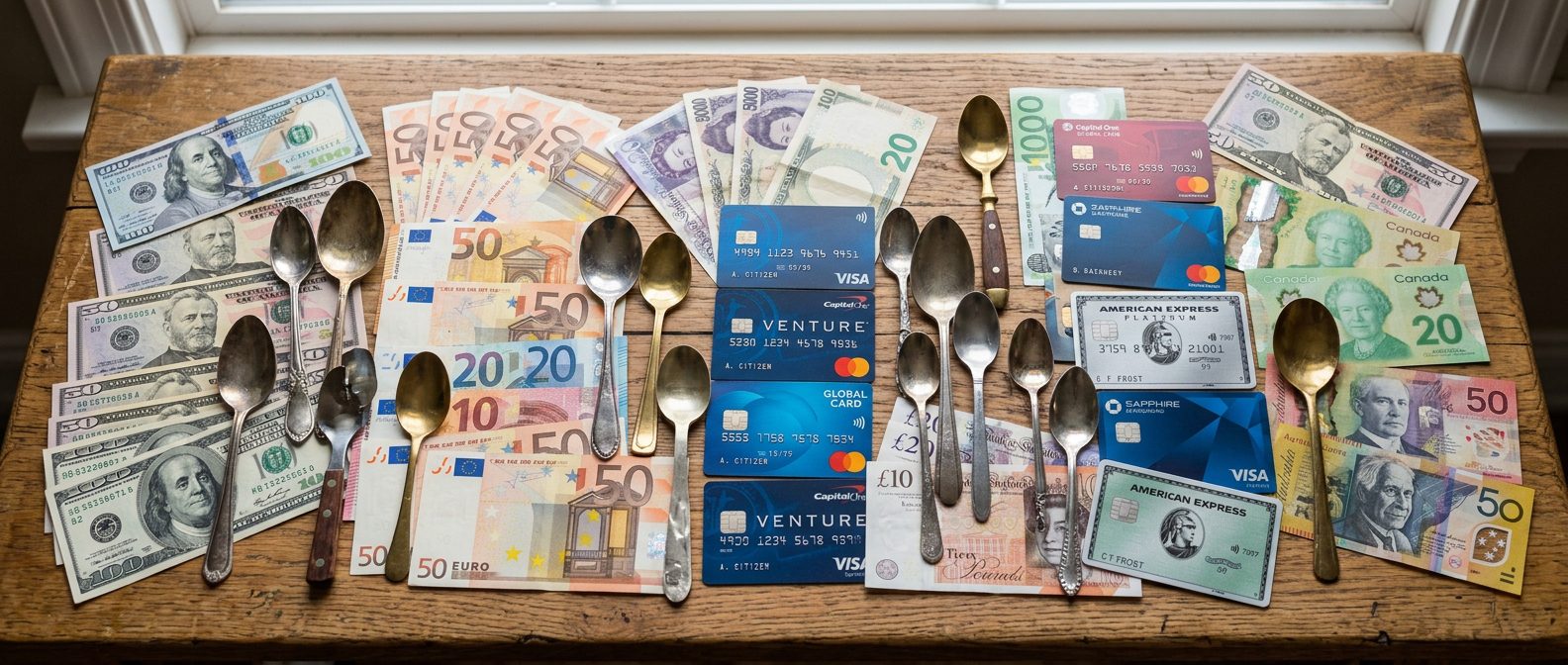
Exactly. And speaking of spoons, let’s bring spoon theory into the planning phase.
Theresa:
We’ve talked about spoon theory a lot until doing this podcast. Neither of us had ever heard of it, but now we talk about our spoons all the time. So your spoon energy is not just about your energy, but it does figure into your financial planning, because high spoon days often cost more money.
Theresa:
Travel days, high spoons. Use-in days, medium to high spoons. Rest days, low spoons, and usually low cost.
Theresa:
And remember, we are kind of generalizing here. Everybody has their own spoon spending, so just because one person spends so many spoons on one activity, maybe that’s not the case for you. You know yourself better than anybody.
When you’re budgeting, think of how spoons and dollars are connected. For example, high spoon days, you might eat a taxi, your mobility aids, or pre-booked tours or other arrangements. Low spoon days could be neighborhood walks, cafes, or simple meals.
And a medium spoon day could be flexible, independent sightseeing, or short excursions.
Theresa:
This helps you avoid overscheduling and overspending. Build-in recovery days. They’re good for your body and your wallet.
Theresa:
And remember, budgeting spoons means budgeting time. Rushing costs money. Slow travel saves it.
Theresa:
Let’s talk about the hidden costs people don’t plan for, especially travelers with latent life disabilities. Number one, mobility aid fees, wheelchair batteries, repairs abroad, replacement parts, airline damage, where insurance can help. Number two, accessible transportation, taxis instead of buses, private transfers, accessible trains or ferries.
Number three, medical needs, extra medication, over-the- counter items, compression socks, hydration packets, airport medical assistance. Usually free tipping is customary. Number four, food and hydration, buying water frequently, needing predictable meals, paying more for seating comfort.
Theresa:
Number five, that’s fatigue costs. And that’s a big one. When you are tired, you spend more.
You grab the nearest restaurant, the nearest taxi, the nearest or the quickest anything, no matter the cost.
Theresa:
And budgeting for fatigue means planning. Rest blocks, easy meal options, nearby cafes, accessible routes, backup plans.
Theresa:
And insurance is a non-negotiable. It’s not a luxury. It’s really a budget protector.
And I know some people say, and I know all of us now who are listening to this, or a lot of us might have some kind of disability or health condition. But even if you get along perfectly well or you’re young, you don’t say, well, I’m young, I’m healthy, because on the way to the airport or strolling around in Rome, you could trip and fall and break an arm. And that doesn’t matter what age you are.
So be sure to get insurance and watch for the gaps. Check on pre-existing coverage, mobility aid coverage, emergency evacuation, and that’s a big one, and there’s a huge cost if you need to be evacuated, and then trip interruption or delay. So there’s a travel advisor role, and I learned this when I did a stint as a travel advisor.
Not all of the savings are worth it, especially if you’re on a once-in-a-lifetime trip. You want to save 10 bucks to skip something important that means a lot to you, or to take transportation that requires a lot of transfers. Time is money, so spending more money to get to a place quicker or to have fewer transfers is worth it.
So if the saving money doesn’t make your trip better, it’s not really savings. And for late-in-life travelers, this is everything you could be doing a once-in-a-lifetime trip, and budget is still a consideration.
Theresa:
A cheaper hotel up a steep hill? Not really a savings. A long train route with stairs and transfers?
Not savings. A 6 a.m. flight with three connections? Definitely not savings.
Theresa:
KIDD And for people like us who live four hours or more from a major airport, driving that distance to save 50 or 100 bucks, especially with the cost of gas, and then having to pay for parking, is not necessarily savings, and you can’t predict traffic. We always are, I’ll say 90% of the time, have to make a connection in a hub. So for us, we’re used to it, but we do not like to find flights that are 18 hours long because they’re $50 less, or you may have three connections or 10-hour layovers.
It’s not worth it. So you really have to evaluate that. But if you have a perfect trip, you also need to protect your spoons, which means protecting your comfort, means protecting your comfort and your joy.
Theresa:
Now let’s talk about saving money, because Italy doesn’t have to break the bank.
Theresa:
Nor does any place you travel to. You may just need to adjust how long you stay there, where you stay, having a home base. It’s all what matters to you, what’s important, and what maintains your energy.
So one tip is to travel off-season, which we really enjoy. Part of it, there’s fewer crowds, and like in my case, because I don’t see well, crowds are really difficult for me. So in places in, I’ll say, the northern hemisphere, October to April can be very budget-friendly.
There’s fewer crowds, the weather can be cooler, and the prices can be lower. Shorter season is also good, and again in the northern hemisphere, because the southern is just the opposite. So late September, early October, late April and May are still good times to travel, and we even have done it in December and January.
But we’re used to cooler weather and snow, and it didn’t bother us at all. Another tip is to use credit card points and frequent flyer miles.
Theresa:
If you’re late to the points game, don’t worry. You can still use a travel card with no foreign transaction fees. You can earn points on groceries and prescriptions, you can redeem for flights or hotels, use companion passes, use airline shopping portals for extra miles.
Theresa:
And one thing that I think is really good is if you get even the basic credit card, you can save money on your luggage fees, because they’re getting out of control these days. One round trip can almost pay for the credit card fee. Another tip is to book early, and remember accessible rooms are limited, so they can go early and go fast.
We especially enjoy apartment hotels. We do a hub and spoke type of travel, usually and just do day trips. You know there are transportation costs for that as well.
So that’s something to consider, you know, if you’re paying excessive train fares or paying a lot for gasoline, you need to either move or figure out something else. We like kitchens because we can store food, we can cook our food, we can reheat food. We have plenty of space for mobility aids, and I like to have a place to sit down.
Does anybody really want to spend any more than, I think, 15 minutes having to sit on a bed and the one desk chair that’s there? And there can be laundry access, which is helpful for us because then we can travel with less luggage. The environment is usually more quiet.
You don’t have to listen to slamming doors like you might in a large hotel. And then we do try to use public transportation. In Italy, again, the trains are affordable, comfortable, mobility friendly, and easy to navigate.
They are accessible. For medical needs, be sure you have extra medication because people don’t always know what it is in another country or it has a different name. That might be difficult to get.
Over-the-counter items, bring those with you. They can cost a lot abroad. Compression socks are always something good to wear.
Buy those at home before you leave. You may need hydration packets. You might want to pre-arrange, and that’s also when you book your ticket, medical assistance.
It’s always been free, but we always leave a tip.
Theresa:
Another money-saving strategy is to look for free or low-cost activities. Visiting piazzas, churches, markets, neighborhood walks, scenic overlooks, public gardens.
Theresa:
Those are all perfect places for people watching to get a real sense of the place you’re visiting. So Italy’s amazing for budget. There’s panini shops, aperitivo hours, like happy hour, and be sure you check on hours of opening at certain places because Italy’s siesta is called a riposo.
So, you know, shops close, restaurants close, so basically like lunch times 12.30 to 2.30 or 3-ish. They also have bakery, breakfast, house wines save money, there’s street markets, and local grocery stores that have, you know, salads and fruit or something quick. And then you can also save money or at least get a space by pre-booking trains, tours, museums, and maybe airport transfers.
Theresa:
Okay, let’s outline a sample budget for a 10-day Italy trip.
Theresa:
So flights will be a huge part of your budget. I like to track flights. There are flight trackers.
If you follow points, there’s different clubs you can join or newsletters that can say, hey there’s a flight to Rome that’s only so many points, you can jump on that. But otherwise, especially now with the cost of fuel, flights are crazy. So if you see a good deal, jump on it.
I think our flight, which I found on Delta, they had a points special. I think we paid $60, which I’m happy with. The flight jumps all around.
I’ve seen it as high as $2,000. So watch your flights. Lodging, I would say off-season and especially for a hotel, be on the lower end.
And it depends on the hotel you want. If this is a once-in-a-life trip, don’t just go for the least expensive hotel. And they would probably run you about, I’d say $80 to $200 or $90 in the off-season and a tad more in the shorter season and a lot more in the high season.
And depend on what you eat. If you enjoy trying food, you could eat out three meals a day. So your budget will be different from somebody like us, who often do like a late lunch, early dinner, which will be harder in Italy because of opening times.
But again, we have an apartment where we could cook or get carryout. Most of the restaurants have menus. So you could check that before leaving.
And transportation, if you’re just staying in a base, you may just enjoy staying in that city. But if you’re going out for day trips, that’s an additional cost to consider. And then consider museum admissions.
And if you go to a concert, things like that for your budget. Always allow a buffer for medical inaccessibility. Maybe the weather’s bad and you decide on a taxi or you hurt yourself and you have to get a knee brace or something like that.
Of course, have insurance, which you will have bought before going on the trip. For your spoons, be sure to add a fatigue buffer. Maybe it’s 10 to 15 percent of your budget as well.
Like, I want to get back to the hotel right now. So just grab the nearest cab.
Theresa:
So your Italy budget isn’t just numbers. It’s your spoons, your mobility needs, your comfort, your pace, your backup plans, and your energy.
Theresa:
Budgeting truly is self-advocacy. You’re saying to yourself, I deserve a trip that fits my body, my needs, and my desires. And I want something that I am happy and satisfied with.
Theresa:
And Italy is one of the best places to do that. Accessible, beautiful, delicious, and full of gentle experiences. We’ve created a downloadable list for listeners.
Perfect Trip Tips. How to plan Italy with limited spoons and limited funds.
Theresa:
What you will find on that list, which you will again find in the show notes. Some of the tips, and these are downloadable. You can do whatever you want with them.
Choose one dream moment and budget around that. Spend money where it protects your body and save money where it doesn’t cost any pleasure. Build in recovery days.
They save both spoons and money. Book accessible rooms early. Use points when you can for flights and hotels.
Travel off-season or the shoulder season. Beware though, in Europe, August is when almost everything closes up. So it may be more difficult doing what you were hoping to do.
Bring a medical summary and a medication list. Choose apartment hotels for comfort and savings. Use trains or public transport instead of taxis when possible.
Pack your mobility aids wisely. That includes backups. Use a dedicated online marketplace for finding used equipment.
Create a fatigue buffer into your budget. Plan meals around energy levels, and don’t chase every site. And that’s hard for those of us with FOMO, but it can really save on your spoon usage.
So order them according to how important it is to you.
Theresa:
Episode 2 will teach you how to use these tips, including how to get into the points game, how to find used mobility equipment, and how to build a spoon-based itinerary.
Theresa:
Thanks for joining Living the Good Life today. If you’re planning a trip to Italy or anywhere else for that matter, remember, your body is your compass. Budget for it, honor it, and let it guide you.
Theresa:
We’ll be back next week with more real-world travel tips for real bodies.
Theresa:
Until then, take care of your And I’d say ciao for now, but I have been reading up and ciao is not just a casual word. It’s really used for people you know, but I’ll use it here because we’re getting to know all of our listeners. See you next time.
Theresa:
(Transcribed by TurboScribe.