Theresa:
Robert:
Theresa:
Hey, this is Theresa, and we are so thrilled that we’ve already reached 20 episodes. That’s a huge milestone for us. Most people quit, but we keep trudging on and hope you are enjoying our content.
Last week we did half of a podcast done by our friends at Google Notebook. We just plugged in a bunch of our earlier podcasts regarding travel and asked them to put something together. So we did that first, and this week we’re doing the second part.
We are getting to the exciting part about cruising in the Midwest. Now who’s ever thought about that? Well, having lived on Great Lakes many of my years, I think it’s spectacular.
So take a listen.
Speaker 2:
We aren’t going to the predictable Caribbean islands or the crowded ports of the Mediterranean. No.
Speaker 1:
Instead, the sources take this floating base camp somewhere completely unexpected. The American Midwest. We are diving into the Great Lakes.
Speaker 2:
The inland seas of North America.
Speaker 1:
I have to admit, I completely geeked out over the geography here. When you say lake, people usually picture a calm, glassy pond where you take a rowboat out to fish. The Great Lakes are not ponds.
They contain roughly 20% of the entire world’s fresh surface water. To put the scale into perspective, Lake Superior alone is the size of the country of Austria.
Speaker 2:
It’s massive.
Speaker 1:
Lake Michigan is larger than Croatia.
Speaker 2:
They are massive, dynamic, violently powerful bodies of water that generate their own distinct weather systems and possess a deeply ingrained, somewhat tragic maritime culture.
Speaker 1:
Right. If you look at the history, Great Lakes cruising is actually not a new, modern invention. Back in the late 1800s and early 1900s, massive coal-fired steamships operated as floating palaces, carrying wealthy travelers and immigrants between industrial hubs like Chicago, Detroit, and various Canadian ports.
It was a thriving industry. But then the interstate highway system was built, commercial air travel took off, and the Great Lakes passenger industry essentially died overnight.
Speaker 2:
But what the sources explore is the modern renaissance of this industry. However, it hasn’t returned in the form of massive 4,000 passenger floating cities. It has returned in the form of small, intimate expedition ships.
The specific vessel detailed in the sources is called the Victory First. We’re talking about a capacity of maybe 200 to 400 passengers maximum.
Speaker 1:
So absolutely no towering water slides, no rock climbing walls, no massive casinos, and no hairy chess contests by the pool.
Speaker 2:
Exactly. It is a quiet, deeply destination-focused, highly educational experience. And that smaller scale is vital for accessibility.
On a megaship, just walking from your cabin at the front of the ship to the dining room at the back can be a half-mile journey. On a ship like the Victory Third, the footprint is condensed. Everything is manageable.
Speaker 1:
The sources outline the entire experience, and it starts with the logistics of boarding. They departed from Toronto, Canada. They stayed pre-cruise at the Westin Harbor Castle, which they noted had a wonderfully accessible entrance, allowing a seamless transition from the hotel directly to the port.
Speaker 2:
Right.
Speaker 1:
And when it came time to actually board the Victory I, the crew employed a technique that is central to the philosophy of adaptive travel.
Speaker 2:
Yes. With an estimated 25 to 30 percent of the passengers on these types of expedition cruises using some form of mobility aid, whether that is a cane, a walker, or a wheelchair, the crew cannot just point to a steep metal ramp and say, good luck. They employ what they call the sailor’s handshake.
Speaker 1:
Detail what that actually looks like mechanically, because it is a very specific type of assistance.
Speaker 2:
It is not a passive offer of a hand to hold. A standard handhold is unstable. If the guest slips, both people’s grips can easily break.
The sailor’s handshake is a firm, highly calibrated forearm-to-forearm grip.
Speaker 1:
Like a Roman handshake.
Speaker 2:
Exactly. The crew member anchors their stance, locks forearms with the guest, and physically bridges the gap between the solid dock and the moving gangway. It’s a transfer of stability.
It is a level of human care that goes far beyond structural ADA compliance. They are using their own bodies to act as the infrastructure.
Speaker 1:
Inside the ship, that thoughtful accessibility continues. They describe the coastal dining room, which is completely step-free, ensuring mobility devices can glide right up the tables. But they also highlight a really unique culinary feature on board.
An interactive restaurant simply called the grill.
Speaker 2:
Which sounds like a phenomenal sensory experience, provided you are prepared for it.
Speaker 1:
Oh, it sounded so incredibly cool. You go up to the grill, and instead of just ordering off the menu and waiting for a plate, the staff brings you a specialized volcanic stone that has been heated in an oven to 400 degrees Fahrenheit. You literally cook your own cuts of premium meat or fresh fish right at your own table on this scorching rock.
It’s highly interactive. It’s communal. You control exactly how your food is prepared, and it is all included in the fare.
Speaker 2:
However, the sources are meticulous in their auditing, and they do note a significant architectural caveat regarding the grill.
Speaker 1:
Right. To get to the sundeck space just above the grill, guests are required to navigate a set of pretty steep maritime-style stairs. There’s no elevator access to that specific upper vantage point.
Speaker 2:
Which serves as a very realistic reminder that no ship, regardless of how modern or well-designed, is 100% perfect for every single body. But what makes the Great Lakes Expedition so compelling are the ports of call. Because you aren’t dealing with the ancient, protected, and often untouchable cobblestone grids of medieval Europe, many of these Midwestern American and Canadian cities have newly revitalized, heavily paved, highly accessible industrial waterfronts.
Speaker 1:
Let’s track the actual route they sailed. They start near the iconic Niagara Falls, but they dock in a port called Port Colborne. Now, instead of just taking a standard bus to look at the water from a safe distance, the excursion they chose took them to a decommissioned hydroelectric power plant.
Speaker 2:
This sounded amazing.
Speaker 1:
They boarded a massive, fully accessible industrial elevator and plunged 180 feet below the Earth’s surface.
Speaker 2:
They entered a half-mile-long, perfectly flat concrete tunnel that was originally carved out of the bedrock to expel water from the turbines.
Speaker 1:
And they rolled all the way down this tunnel, deep underground, and it empties out onto a viewing platform literally right at the explosive base of the falls. You feel the vibration of the water in your chest. It is a brilliant example of repurposing heavy industrial infrastructure to create a deeply accessible, thrilling tourism experience.
Speaker 2:
From there, the Victory Eye crossed Lake Erie and traveled down to Cleveland, Ohio, specifically to visit the Rock and Roll Hall of Fame. But the sources do not just list the exhibits. They analyze this stop through a very specific, critical sensory lens.
Speaker 1:
Right. If you’re a music fan, it sounds great. But if you have vision impairments or sensory processing issues, the Rock Hall is actually a massive, overwhelming challenge.
The architects intentionally designed the museum to be kept very dark in order to preserve the fragile costumes and paper artifacts. That low lighting immediately creates a barrier for anyone with depth perception or low vision issues.
Speaker 2:
Furthermore, the audio environment is chaotic. There is loud, overlapping music playing from dozens of different video screens and exhibits simultaneously. The sound waves are bouncing off the hard glass and steel architecture.
Speaker 1:
If your brain struggles to filter out competing audio tracks, this environment is essentially a sensory minefield. It goes back to that radio and strobe light analogy. It highlights exactly why pre-planning and reading these types of detailed audits are so crucial.
Just because a famous building has a wheelchair ramp at the front door does not mean the interior environment is functionally accessible for your specific body disruption.
Speaker 2:
Moving onward, the shift sails to Detroit, Michigan. The standard assumption for Detroit tourism is to take automotive factory tours. Instead, the sources highlight a visit to the Detroit Institute of Art to view the massive, breathtaking Diego Rivera murals.
It is a powerful reminder that these gritty, industrial, midwestern cities are actually hiding world-class, highly accessible cultural hubs.
Speaker 1:
Then they sail all the way up into Lake Huron and Lake Michigan, reaching Escanaba, located in Michigan’s remote upper peninsula. And this stop was absolutely fascinating. Instead of doing a standard walking tour of the town, they booked a premium excursion to a Michigan State University forestry research facility located deep in the woods.
Speaker 2:
And this is where the educational aspect of expedition cruising truly shines. They didn’t just look at trees, they engaged with cutting-edge environmental science.
Speaker 1:
They learned about the biochemical differences in maple trees. We all know sugar maple syrup, which is what you put on pancakes, but the researchers were studying red maple syrup, and they discovered that red maple syrup on a molecular level does not support microbial life.
Speaker 2:
Really?
Speaker 1:
Yeah. Bacteria cannot grow in it. Because of this, it doesn’t require rigorous pasteurization, and the medical community is actively researching its unique properties as a potential hydration and nutrient delivery system for cancer patients who are undergoing severe chemotherapy and cannot tolerate traditional liquids.
Speaker 2:
That is wild. It’s those precise, unexpected moments of profound discovery that make this type of travel so rewarding. You aren’t just buying a cheap plastic magnet in a souvenir shop, you’re interacting with scientists who are actively trying to solve complex medical disruptions.
Speaker 1:
And finally, the ship hits Mackinac Island. This is an island entirely frozen in time. Absolutely no motorized cars are allowed on the island, only bicycles and horse-drawn carriages.
The sources carefully note the logistics here. While the island does have some specifically adapted carriages that can accommodate a wheelchair trying to board the standard, high-stepping horse carriages can be physically daunting, if not impossible, for someone with limited mobility.
Speaker 2:
That makes sense.
Speaker 1:
But if you can manage the logistics, you can visit the incredibly historic Grand Hotel, which boasts the longest contiguous porch in the entire world.
Speaker 2:
So the Great Lakes offer a highly curated, very manageable, surprisingly accessible adventure. But this brings us to a critical junction in our deep dive. What happens when a traveler with a body disruption decides they want to leave the paved waterfronts, the gentle ramps, and the predictable logistics entirely behind?
What if they possess an intense desire to explore a raw environment that actively resists human infrastructure?
Speaker 1:
To answer that, the sources take us out of the Midwest and transport us to the extreme edge of the continent, the Tongass National Forest in Alaska.
Speaker 2:
The sheer raw scale of the Tongass is almost unfathomable to the human mind. We’re talking about 16 million acres of wilderness. Geographically, it’s a splintered, shattered archipelago consisting of over a thousand individual islands violently carved by ancient glaciers into deep saltwater fjords.
And crucially, it is a temperate rainforest. It is not an environment designed for human comfort.
Speaker 1:
Okay, here’s where it gets really interesting. The travel organization they chose to navigate this wilderness with is simply called The Boat Company. And the origin story of this specific ecotourism nonprofit is, without a doubt, one of the most bizarre, deeply ironic pieces of environmental history I have ever heard in my life.
Speaker 2:
It is a phenomenal collision of corporate monopoly, industrial extraction, and radical environmental preservation. The story traces all the way back to the A&P grocery empire. For decades in the mid-20th century, A&P was the undisputed monopolistic king of American retail.
They controlled the supply chains.
Speaker 1:
And the heir to this massive grocery fortune, a young man named Mike McIntosh, decides to go up to Alaska in the 1950s. He takes a job working the slum line at the Waterfall Cannery. No, this cannery was not a quaint local business.
It existed for one brutal, highly efficient reason, to extract, process, and can millions of pounds of Alaskan salmon to supply every single A&P store across America.
Speaker 2:
Right. Massive extraction.
Speaker 1:
It was mass, unchecked industrial extraction on a staggering scale. But while Mike is up there, elbow deep in fish guts and breathing in diesel fumes from the fishing fleet, something unexpected happens. He completely falls in love with the pristine, fragile ecosystem of the Alaskan wilderness.
Speaker 2:
So fast forward a few decades to the 1970s. The patriarchs have passed and the immense family inheritance is being distributed. Instead of doing what most heirs do, buying fleets of luxury yachts or investing in massive real estate developments, Mike McIntosh pivots.
He takes his massive portion of the grocery fortune and creates a philanthropic foundation entirely focused on environmental protection.
Speaker 1:
But he is incredibly pragmatic. He doesn’t just sit in a plush corner office in Washington, D.C. writing checks to charities. He realizes that there are brilliant environmental lawyers fighting tooth and nail in the capital to save a forest they have never physically seen.
They’re arguing over topographic maps in windowless conference rooms.
Speaker 2:
Yeah, totally disconnected from the reality.
Speaker 1:
Right. So Mike decides he needs to bring the heavyweights, the aggressive lawyers from the Natural Resources Defense Council, the lobbyists from the Sierra Club all the way up to the Tongass to physically show them the towering ancient cedars and the whales they’re fighting for.
Speaker 2:
He understood that to fuel their legal stamina, he needed them to feel the scale and the overwhelming fragility of the landscape firsthand. But to navigate a splintered archipelago of a thousand islands, he needed a boat. And this is where we encounter the ultimate historical irony of the story.
The specific vessel Mike McIntosh purchased in 1980 to launch this aggressive conservation effort was a ship called the Observer.
Speaker 1:
And do you know who owned the Observer before Mike bought it?
Speaker 2:
I do. And it’s crazy.
Speaker 1:
Standard Oil. It was quite literally a heavy duty vessel used by fossil fuel executives to cruise the Alaskan coast and survey areas for mass industrial drilling operations. And Mike buys it, strips it and repurposes it to save the very forest it was designed to exploit.
It is such a pragmatic, ruthless approach to conservation. He weaponized the heavy infrastructure of industry to fight that exact same industry.
Speaker 2:
Exactly. And that ethos of pragmatic adaptation survives today. The boat company currently operates two small, rugged vessels, one being the Mist Cove, carrying only about 20 to 24 guests at a time.
And they operate on a philosophy that Captain Jim, the master of the vessel, proudly refers to as the anti-itinerary.
Speaker 1:
I love this concept. Trying to fight the weather in the Tongass National Forest is like trying to fight gravity. You will lose every single time.
The captain explicitly states on day one that there is no set schedule. The entire trip, every secluded cove they anchor in, every muddy hike they attempt to take, is dictated entirely by the immediate unpredictable whims of the wind, the tidal shifts and the migration patterns of the wildlife.
Speaker 2:
It requires a total psychological reset of the modern guests’ expectations. In normal life, you force the environment to bend to your outlook calendar and your dinner reservations. In the Tongass, if a 50 knot wind suddenly picks up, you pivot.
And above all else, you have to accept the rain.
Speaker 1:
Oh yeah, the rain.
Speaker 2:
The Tongass receives upwards of 200 inches of rain annually. It’s not just bad weather. The rain is the literal biological engine of the entire ecosystem.
You put on your heavy rubber boots, you zip up your Gore-Tex and you actively engage with the wet.
Speaker 1:
But here is the massive logistical problem. Getting into that wet, rugged, violently unpredictable environment presents a monumental hurdle for physical accessibility. And this is where the sources highlight a critical, unavoidable conflict in maritime law.
Speaker 2:
We are talking about SOLUS regulations, the International Convention for the Safety of Life at Sea.
Speaker 1:
Right. To prevent a ship from catastrophic rapid flooding in the event that the hull is breached by a rock or a rogue wave, SOLUS requires the installation of high watertight steel bulkheads. You find these at the bottom of exterior doorways and sectioning off interior hallways.
The logic is brutal, but necessary. You literally sacrifice a flooded hallway to save the buoyancy of the entire ship.
Speaker 2:
Makes sense for safety, sure.
Speaker 1:
But these bulkheads create a 6 inch to 12 inch solid steel lip in the doorways, which means that true ADA wheelchair compliance, a smooth flat roll through, is physically and legally impossible on these small, rugged vessels.
Speaker 2:
The architecture of the ship inherently, legally fails the disabled traveler. The steel cannot be removed. So if the structure cannot adapt, how does the boat company adapt?
The sources highlight the philosophy of the current operator, Hunter McIntosh. Instead of relying on concrete ramps and automated elevators, they rely on a rigorous hiring process to find, quote, good human beings.
Speaker 1:
Now, when I first read that, it sounded like generic corporate fluff, like, ah, we hire good people. But when you look at the mechanics of the trip, it is actually a profound, highly functional practice of radical hospitality. Because they legally cannot cut down the steel doors, they compensate for the architectural failure with immense human empathy and physical assistance.
We see this manifested perfectly when they load the skiffs.
Speaker 2:
The skiffs are the small, wobbly, motorized outboard boats used to transport guests from the anchored mothership to the muddy shores of the islands. Boarding them while they bob in the ocean swell is precarious for anyone, let alone someone with limited mobility.
Speaker 1:
And this is where the sailor’s handshape returns, but on a much more intense level. When guests are trying to time the swell and step down into those wobbly skiffs, the crew never, ever rushes them. They do not look at their watches.
They offer that firm, unhurried forearm-to-forearm grip. They use their own core strength to absorb the kinetic energy of waves, safely bridging the terrifying gap between the steelship and the small boat.
Speaker 2:
They are actively replacing missing structural infrastructure with highly trained human infrastructure. And the emotional anchor of this entire Alaskan section of the source material is a story that perfectly encapsulates this ecos. It is a story about a guest with low vision attempting to hike a trail known as Moss Gully on the remote Brothers Islands.
Speaker 1:
This specific story really got me. So you have a guest who has significant vision impairments. She wants to experience the forest, so she joins a guided hike.
But as they get deeper into the Tongass, the terrain becomes incredibly hostile. There are massive hidden tree roots slick with rain. The moss is deep and spongy.
And beneath the dense canopy of the ancient cedars, the lighting becomes incredibly flat, destroying any sense of depth perception.
Speaker 2:
It just becomes too dangerous for her to navigate.
Speaker 1:
Exactly. She physically cannot continue the hike without risking a severe fall. Now think about how this scenario plays out in a standard corporate group tour.
Speaker 2:
In a standard tour, this is exactly where the friction and the anxiety peak. The tour guide starts stressing about staying on schedule to get back to the bus. The rest of the group gets impatient.
The guest with the vision impairment feels an overwhelming sense of shame and feels like a burden. The entire atmosphere becomes tense and miserable.
Speaker 1:
Exactly. But remember the core philosophy, the anti-itinerary. There is no bus to catch.
There is no schedule. There is no rush.
Speaker 2:
So how does the guide react?
Speaker 1:
A young guide named Andrew assesses the situation. He simply tells the rest of the able-bodied group to hike on ahead with another guide. He does not pressure the low vision guest to push through the pain.
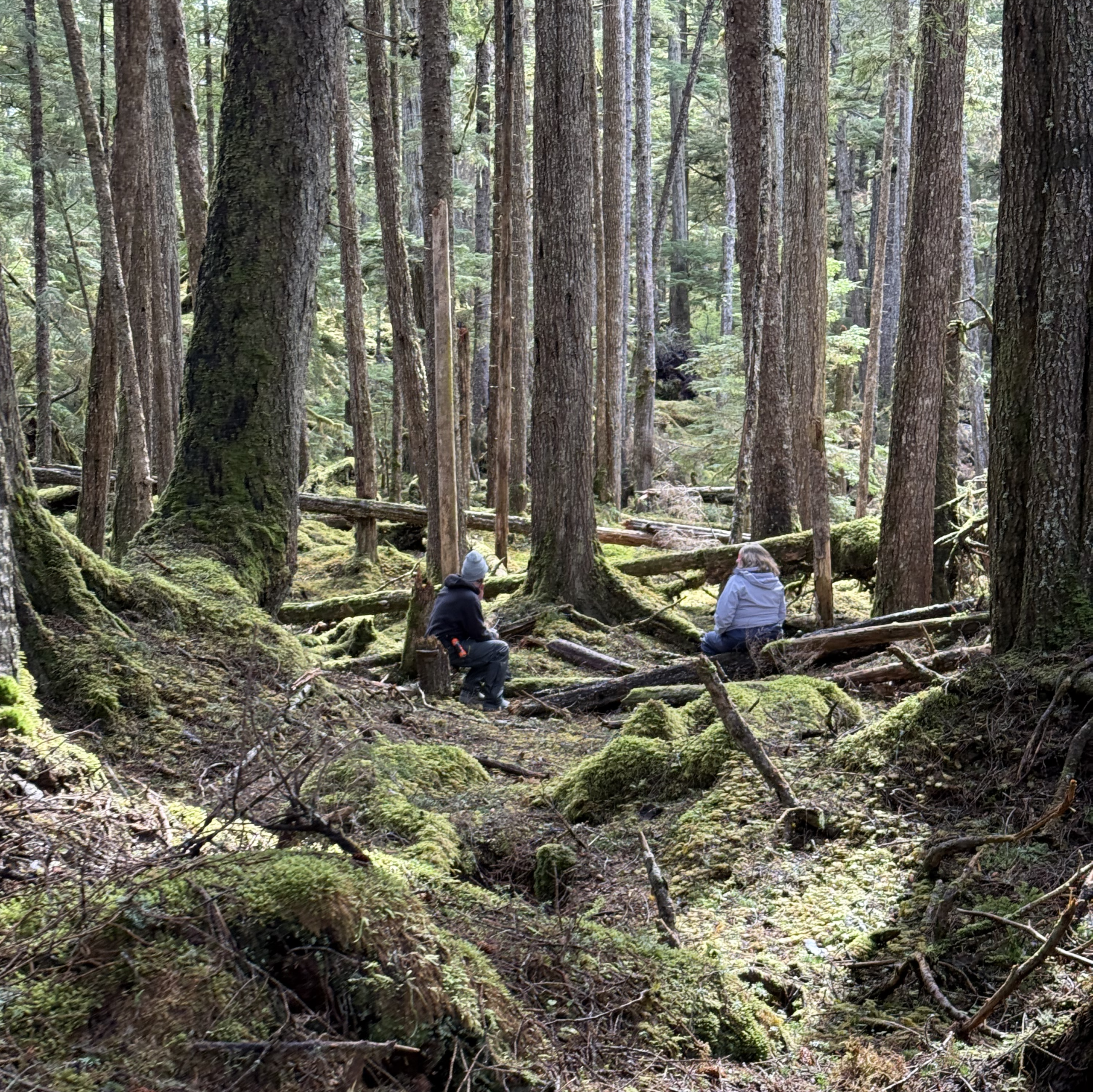
He doesn’t awkwardly try to drag her over the slick roots to conquer the trail. He simply sits down next to her on a damp mossy log in the middle of the trail. And they just sit there for hours.
They talk about life. They listen to the rain hitting the canopy, and they are completely surrounded by the staggering magnitude of the ancient forest. He allowed her to experience the profound depth of the wilderness entirely on her own terms, at her own pace.
Speaker 2:
It is a stunning, deeply moving example of human empathy bridging the exact gap where the physical infrastructure and the natural terrain entirely fail. He didn’t view her limitation as a problem to be solved. He viewed it as a parameter to adapt to.
But this raises a fascinating pivot. If human empathy and unhurried pacing are the keys to accessing the raw wilderness, how do we apply that exact same pacing to dense, ancient, human-built environments?
Speaker 1:
So what does this all mean for the modern city? To find out, we take our final deep dive into a 750-year-old experiment in extreme urban survival, Amsterdam.
Speaker 2:
Amsterdam is arguably the world’s greatest master class in adapting human civilization to a hostile geography. You look at the beautiful canals and the tall, elegant brick houses, and it looks incredibly stable. But the reality is that the entire city is quite literally built on top of a swampy, unstable peat bog.
Speaker 1:
Wait, the whole city is on a swamp?
Speaker 2:
Oh yeah. To create solid ground where none existed, the early Dutch engineers had to drive hundreds of thousands of massive wooden pilings, entire tree trunks, deep through the soft peat, until they hit the solid, compressed sand layer far below the surface.
Speaker 1:
So the entire magnificent city is propped up on submerged wooden stilts.
Speaker 2:
Precisely. But here is the terrifying engineering catch that still dictates life in Amsterdam today. Those wooden pilings only retain their structural integrity if they remain completely submerged in an oxygen-free underwater environment.
If the groundwater levels drop even slightly and oxygen hits that ancient wood, microbial rot begins almost immediately.
Speaker 1:
The foundations begin to literally disintegrate, which is exactly why when you walk through Amsterdam, you see those famous leaning houses that look like they’re about to topple into the canals. Their wooden foundations have rotted and shifted.
Speaker 2:
So geography really is destiny here. Managing the complex system of canals and water levels isn’t just about keeping your shoes dry during a rainstorm. It is a life or death civic duty to keep your neighbor’s house from collapsing into the swamp.
And because your neighbor’s water management directly affects the structural integrity of your own home, it forced the creation of a society based on deep, highly organized, inescapable cooperation.
Speaker 1:
That makes total sense.
Speaker 2:
The Dutch term for it is the polder model. You have to work together, you have to compromise, or everyone collectively sinks.
Speaker 1:
That underlying culture of intense cooperation is visible everywhere. But it also creates a highly calibrated, incredibly fast-moving urban environment that can be deeply intimidating for a traveler with a mobility issue. Amsterdam is a living, breathing, open-air museum.
Speaker 2:
But a museum where you’re actively, constantly trying not to get run over.
Speaker 1:
Yes. I mean, I have to warn you, and the sources make this abundantly clear. The bicycle traffic in Amsterdam is not a quaint leisure activity.
It is a highly aggressive, deeply efficient mode of mass transit. The locals have spent decades negotiating the physical flow of this traffic. There are dedicated red-paved bike lanes everywhere.
Speaker 2:
And the cardinal rule for pedestrians, which disabled and able-bodied tourists alike often fail to grasp, is to respect the flow.
Speaker 1:
Yes. If you, as a tourist, step off the sidewalk and into that red bike lane, and you stop to look at a Google map on your phone, you are throwing a massive wrench into a perfectly tuned high-speed machine. You are a boulder in a fast-moving river.
Speaker 2:
Listen for the bells.
Speaker 1:
Exactly. The locals won’t necessarily yell at you, but they will aggressively ring their bicycle bells. If you hear the bells, do not freeze.
Jump back onto the pedestrian sidewalk immediately. Do not disrupt the negotiated flow of the city.
Speaker 2:
But despite the chaotic speed of the bicycles and the inherent architectural challenges of navigating a 750-year-old street grid, Amsterdam is remarkably, intentionally accessible. The flat geography of the bog certainly helps, but they have intentionally designed their public transit network, operated by a company called GVB, with modern accessibility firmly in mind.
Speaker 1:
The newer blue-and-white electric trams that snake through the city feature low-floor entries and designated spacious wheelchair parking spaces. The city buses are equipped with fold-out ramps that the drivers are trained to deploy quickly. The underground metro system features functional elevators at every single station.
And the massive ferries that transport thousands of people daily across the Eye River to the northern neighborhoods are completely free, flat, and fully accessible to power chairs.
Speaker 2:
However, a traveler must remain realistic. The cobblestones are a constant brooding reality in the historic center. They are rough, deeply uneven, and present a significant trip hazard for anyone using a cane, and they cause massive vibration fatigue for anyone in a wheelchair.
Speaker 1:
And then there are the historic canal houses themselves. Because land was taxed based on the width of the canal frontage, the houses were built incredibly narrow and incredibly tall. This means the stairs leading up to the front doors and the stairs leading down into the basement levels are terrifyingly steep.
They create immediate, unsolvable architectural barriers.
Speaker 2:
The sources contrast the museum experiences beautifully. Massive state-funded institutions like the Wrights Museum and the Van Gogh Museum have been heavily renovated to be highly accessible, with smooth floors and massive glass elevators. But the Anne Frank House, which is located inside one of those historic narrow canal houses, is fundamentally inaccessible to wheelchair users due to its incredibly steep, narrow, historic wooden stairs.
Speaker 1:
Right, they just can’t change it.
Speaker 2:
Exactly. The museum cannot alter the architecture without destroying the historical integrity of the hiding place. They do, however, offer an immersive virtual reality tour on the ground floor for those who cannot climb.
Speaker 1:
Which brings us to a specific day trip the sources highly recommend, and it serves as the perfect culmination of everything we’ve discussed today. Taking a slow, scenic train and bus ride out of the city center to visit Muiderslot Castle.
Speaker 2:
Muterslot is a fascinating, brutal piece of medieval history. It’s a heavy, square, brick fortress, originally built in the 13th century by a ruler named Count Florus V. And it’s important to understand that it was not built to be a pretty decorative royal residence.
It was a machine designed to extract wealth.
Speaker 1:
Right, it sat strategically at the mouth of the Vecht River. Count Florus and his soldiers would string a massive, incredibly heavy iron chain entirely across the river, physically blocking wealthy merchant ships from sailing through until they paid a heavy toll.
Speaker 2:
It was a literal medieval toll booth enforced by armed guards. But Count Florus V made a lot of powerful enemies with that aggressive taxation, was eventually kidnapped by his own nobles, and was brutally murdered. The original castle was destroyed in the ensuing chaos.
It was rebuilt about 70 years later on the exact same foundations, which is the imposing, moated version tourists visit today.
Speaker 1:
But navigating an authentic, defensive medieval fortress with a body disruption requires a healthy, pragmatic dose of realism.
Speaker 2:
Exactly. When you arrive at Muiderslot, you encounter a dichotomy of accessibility. The exterior grounds, the massive courtyard, the meticulously maintained historical plum orchard, the herb gardens, and the wide paths circling the scenic defensive moat are all flat, well-maintained, and fully accessible.
In recognition of this partial accessibility, wheelchair users actually receive free entering to the grounds.
Speaker 1:
You can roll right over the drawbridge, but the interior of the castle is an entirely different story.
Speaker 2:
Right. To get up into the defensive towers, the armory, and the historical living quarters, you have to climb spiral stone stairs that are intensely steep, incredibly narrow, and absolutely architecturally necessary for a medieval fortress. There is no hidden elevator shaft carved into the 13th century brick.
Speaker 1:
And this is where the overarching, profound lesson of the entire Living the Could Life series truly crystallizes into a single moment. You do not have to conquer the stairs to enjoy the castle.
Speaker 2:
Say that again, because it is the thesis of adaptive travel.
Speaker 1:
You do not have to conquer the stairs. One of the hosts of the source material, who was navigating a body disruption, arrived at the castle and explicitly chose not to force herself to climb those brutal spiral stairs. She didn’t push her body into a pain flare-up just to check a tourist box.
Speaker 2:
Instead, she adapted.
Speaker 1:
Yes. She sat in the highly accessible courtyard cafe, bathed in the sunlight. She ordered a hot chocolate.
She interacted with a beautiful, highly detailed, tactile bronze model of the castle that was specifically designed for visually impaired visitors to feel the architecture. She watched the other tourists, she looked at the moat, and she simply absorbed the atmosphere of a 700-year-old fortress.
Speaker 2:
And crucially, she didn’t feel lesser than for not going inside the tower.
Speaker 1:
Exactly. She didn’t view the stairs as a personal defeat. She traveled at a pace that fundamentally honored the reality of her body on that specific day.
Speaker 2:
That is the pure essence of adaptive travel. It’s about aggressively removing the external societal pressure of the perfect itinerary and finding deep, authentic joy in the specific environment you can comfortably and safely access.
Speaker 1:
Okay, let’s take a deep breath and recap this incredible, expansive journey we’ve been on today. We started by completely dismantling the ADA myth, realizing that true functional accessibility in a hotel room requires rigid numbers, nouns, and the psychological comfort of predictability, rather than just a legal checkbox on an architect’s blueprint.
Speaker 2:
We discovered how the brilliant structural engineering of modern cruise ships creates a frictionless, zero-trip environment, offering vital energy autonomy and life-saving ICU-level safety nets for travelers navigating complex chronic conditions.
Speaker 1:
We sailed the massive inland seas of the Great Lakes on the intimate Victory I, utilizing the physical empathy of the sailor’s handshake to explore subterranean power plant tunnels, analyze the sensory minefield of the Rock and Roll Hall of Fame, and discover the cancer-fighting biochemistry of red maple syrup in a remote forestry lab.
Speaker 2:
We ventured into the wild, deeply unpredictable reign of the Alaskan Tongass with the boat company, witnessing how radical human empathy and unhurried patience can perfectly compensate for the rigid world, and how specific, thoughtful travel companies use human empathy to bridge the dangerous gaps in physical infrastructure.
Yeah. But what if we dared to scale that concept up to a societal level? Imagine if we designed all of our modern cities, our public transit systems, our educational institutions, and our workplaces with that exact same sailor’s handshake mentality we found on the wobbly skiffs in the Alaskan wilderness.
What would our society look like if instead of just relying on cold legal checklists and pouring concrete for minimum-grade ramps, we actively cultivated human patience, flexibility, and empathetic infrastructure as the absolute baseline of our daily interactions?
[Speaker 3]
Imagine a world where the guide sitting quietly on the mossy log isn’t a rare, beautiful exception to the rule, but the absolute unquestioned standard of how we treat each other. Thank you so much for joining us on this deep dive. Keep learning, stay intensely curious, and always remember to travel the world entirely on your own terms.