Disclosure:This article may include affiliate links, and some items or experiences may have been provided for review or media access. We may earn a small commission if you use these links.
Travel with Your Special Person
We visit our son a few times per year, yet, we find ourselves thinking of every detail, but inadvertently leave out something or encounter a glitch. That might be the result of delusion, as we are always optimistic that the travel situation might improve. Sometimes it feels as if we have never traveled before. Then again, each journey reveals something new.
To make matters worse, I now suffer from a visual impairment. A double whammy. My impairment restricts many of my activities. I am now accountable for judging not only the difficulty of an activity, but I must also be realistic in assessing my ability to participate in what used to be favorite activities like cycling and hiking.
Planning the Adventure
On a recent and spontaneous visit to Lake Placid, NY, I searched high and low for our ideal short term rental. What works best for us is a house with two bedrooms, two baths, a living area and a mini-kitchen. Even though traveling off-season, our ideal lodging proved difficult to find. Little did we know that there was a hockey tournament in town.
Knowing that a hotel room with two beds and one chair wouldn’t work, I continued my search eventually landing on Cambria Hotel Lake Placid – Lakeside Resort. Two adjoining, but not connecting, rooms would work. With one of the rooms a suite, this arrangement filled our needs quite well.
Evaluate The Needs of All Travelers
Whatever the diagnosis of your special traveler may be, it’s essential to think hard about what they will need. Is extra packing time needed? Do extra changes of clothing fit into the equation? How long does it take to load and unload special equipment?
If you are traveling with equipment, be sure that everything is operational and you have chargers and adapters. Know how long it takes to pack, set up and get organized for the day. Be sure that equipment is fully charged with the option to charge during the night. Are batteries available?
Some processes require extra time. Be sure to allow plenty of time for every element of your travel. Be aware of the comfort of your companion. Do noises bother them? Do they need to eat regularly? Do they need assistance with ADLs (activities of daily living) or meds?
What type of lodging accommodations do you need? Depending on mobility, the options for a comfortable and safe environment may be limited. It helps to make arrangements well in advance.
How able are you to assist with a person who needs extra care? Do you have the strength to push somebody in a chair. Help with toileting and hygiene? Transport the person? Are you traveling with people who understand what it’s like to travel with somebody with special needs? You have enough that needs your attention; you certainly don’t need to travel with somebody who doesn’t get it.
Stay Flexible
In spite of any missteps, we generally remain realistic and prepared for anything. With our son, we must deal with a developmental disability. My impairment remains predictable; a developmental disability brings whatever it may, although certain expectations can become self-fulfilling prophecies.
Although our special travel companions have some things in common, they also have many unique attributes that require individual and personal attention. In other words, what works for one person who is differently abled, doesn’t work for another. It’s not a monolithic demographic after all.
Expect the best outcome in your travels, but don’t be surprised or disappointed if things don’t go as planned. Be alert to any discomfort your companion might be experiencing. Don’t push. Take time for breaks. Take note of what elicits smiles. Consider repeating that event or activity again during your trip.
If your planned itinerary doesn’t work out as planned, take a step back. And speaking of itineraries, consider how your companion has dealt with things in the past. Fatigue and travel often go hand in hand. Don’t expect perfection, just hope for the best and enjoy the time spent with your special person.
Sometimes reality takes precedence and Plan B, D or Z happens. Like us, you may need to travel last minute according to work schedules. Frustrations happen when the best laid plans disintegrate. Just remember the purpose of your trip. Some things never change, yet we still hope that maybe one day they will. We realize it is expecting too much even though our son is in his 40s. Patience is a virtue. Flexibility is an asset.
Have a great trip!
Deep Dive Discussion of the Article
Deep Dive Discussion Transcript
Click to view transcript (High Contrast Mode)
You know, there’s a phrase I hear all the time. It’s usually on, like, a coffee mug or some inspirational Instagram post. It’s about the journey, not the destination.
Right. It’s what you tell yourself when everything’s going wrong. Exactly.
It’s our coping mechanism when we’re stuck in traffic or, you know, the flight’s delayed again. But for a really significant part of the population, that journey part isn’t just a poetic idea. It’s not a minor inconvenience.
It is a logistical minefield. That’s a perfect way to put it. I mean, travel is chaotic for everybody.
You’re out of your routine. You’re in a strange bed. The food’s different.
The time zones are wrong. Yeah. But if you take that baseline level of chaos and then you add a disability or special needs into the mix, the complexity doesn’t just double.
It compounds. It really, really does. And that is exactly what we are unpacking today.
We’re looking at that baseline travel stress through a much more intense, high-stakes lens. We’re deep diving into a guide. Which was written by Theresa Russell.
And it’s such a vital piece of writing. It is. And I want to start there.
Why this source? Because let’s be honest, there’s so much generic travel advice out there. Pack light. Bring snacks.
Oh, yeah. Arrive early. Yeah.
But this feels different. It feels different because of the perspective. And in this area, credibility is just, it’s everything.
Theresa Russell isn’t writing this from a textbook. She’s living this. Yeah.
Every single day. Right. She has this dual perspective that I think is really, really rare.
She does. So first, she personally lives with a visual impairment. And she’s really open about how it restricts her from doing things she used to love, like hiking and cycling.
So she gets that personal frustration of, I used to be able to do this and now I can’t. Exactly. She knows what it feels like to navigate a world that, you know, wasn’t really built for her vision.
But then there’s the other side of it. She’s also a parent. To a son with a developmental disability.
Right. So she also understands the logistics of being the caregiver. The person managing the tickets, the bags, the medication, the schedules, the emotional regulation of someone else.
That combination, living it and managing it, it just cuts through all the fluff. It really does. So our mission today is to get into those weeds.
We’re moving way, way past the bring a neck pillow advice. We are going to look at some granular logistics, some honestly uncomfortable self-assessments and something she calls the plan Z mindset. Plan Z is a brilliant concept.
We’ll definitely get to that. But I think the place we have to start is with the biggest misconception. The elephant in the room.
Which is what? The idea that disabled traveler is a single category of person. The monolith. Exactly.
That’s the phrase she uses. We tend to think, oh, the hotel website says it’s ADA compliant. We’re good.
But travelers with disabilities is not a monolithic demographic. Right. What works for someone with a mobility issue could be completely irrelevant for someone with, say, a sensory processing disorder.
Or even detrimental. A hotel room might have a wide door for a wheelchair, which is great. But if the walls are paper thin and the air conditioner hums all night, it is a nightmare for someone with autism who has that auditory sensitivity.
So one size does not fit all. Not even close. So if that industry label of accessible isn’t enough, and it’s pretty clear it often isn’t, the responsibility falls on the traveler and their companion to do a really rigorous needs assessment.
And this is where she gives what she calls a special set of questions. And these are not your standard travel questions like, is there a pool? These are questions about the actual mechanics of existing. Yeah.
Let’s walk through some of these because this is where the real insight is. It feels like she’s shifting the whole focus from where are we going to how do we function. That is the shift.
So take time management. Most of us think, okay, flight’s at 2, we need to be at the gate by 1, so we’ll leave the house at 11. Simple math.
Standard math. But Russell asks, how long does it actually take to load and unload special equipment? And she means like with a stopwatch. Exactly.
That’s a great point. Because you can’t just throw your bag in the trunk and hop in the back of the shuttle bus. No.
If you’ve got a wheelchair, a walker, heavy sensory gear, you’re looking at a physical transition that might take 15, 20 minutes each time. You might have to disassemble a scooter. You might have to secure someone in a special seat.
Now do that four times a day. Hotel to car, car to museum, museum back to the car, car to the restaurant. You’ve just lost over an hour just in transitions.
And if your schedule doesn’t account for that hour. You’re late. And for a lot of travelers with special needs, being rushed isn’t just annoying.
It creates stress that triggers anxiety, which can lead to behavioral dysregulation. It’s a domino effect that starts before you’ve even had breakfast. So you’re behind schedule before the day has even really begun.
If I haven’t done that math, yes. Another question she brings up, and this seems mundane but it’s critical, is about clothing. The luggage equation.
This was so interesting. She asks, do extra changes of clothing fit in the luggage? Just think about the implications there. Why would you need extra clothes? Well, maybe you’re with someone who has incontinence issues.
Or they’re a messy eater because of motor control challenges. Or they have sensory issues and need to change fabrics if they get a little wet or too hot. So you’re not packing one outfit per day, you’re packing three.
And your clothing volume just doubled or tripled. So that whole carry-on only travel hack that every blogger talks about. Out the window.
It’s probably gone. You’re checking bags. Which means extra fees, sure.
But more importantly, it means extra time at the baggage carousel. It means more physical stuff to manage while you’re also trying to manage a person. She also talks about the sensory environment.
This is huge for neurodivergent travelers, isn’t it? It is massive, she asks. Do particular noises bother the traveler? Imagine a big, bustling hotel lobby. Marble floors, echoing voices, clinking glasses.
To a typical traveler, that feels kind of fancy. But to someone else? To someone on the autism spectrum, that could be a sonic nightmare. A total assault.
It could trigger a meltdown right at check-in. So you need to know ahead of time. Does the hotel have a quiet area? Is our room far away from the elevators? And routine.
We all get hangry. I know I do. But she’s talking about something more rigid.
Much more. It’s not just mood, it’s medical necessity. How strictly does the eating schedule need to be followed? Is it tied to medication? If a medicine has to be taken with food at exactly 8-0-0 a.m., you can’t be stuck in a line for the breakfast buffet.
You need food on hand. Right. And then she gets to ADL’s activities of daily living.
Toileting, bathing, dressing. The absolute basics. Does the traveler need assistance with these? Because if they do, you aren’t just booking a hotel room.
You are setting up a temporary care facility inside a strange little box. It completely reframes the whole planning phase. You’re not just looking at TripAdvisor for the best view.
You’re looking at the floor plan. You have to solve the functional equation first. Only then can you even think about the recreational one.
Okay, so that’s assessing the traveler. But there’s another person in this equation. The companion.
The caregiver. And this, to me, was my favorite part of the article because it’s so rarely discussed. Russell calls for a caregiver reality check.
It feels like a tough love moment. It is. It’s brutally honest self-reflection.
We all want to be the hero, right? We want to say, of course I can take my mom to Europe or I can handle my son’s equipment by myself. But Russell asks, do you actually have the physical strength? And it is a safety issue. It’s not just about being tired.
It is an absolute safety issue. Can you push a manual wheelchair up a steep cobblestone hill? Can you physically lift a grown adult out of a bathtub if there isn’t a lift? Can you do it in a tiny airplane bathroom? Exactly. A bathroom that’s small for one person, let alone two.
And if the answer to can I lift them is maybe, or I think so. Then the answer is no. The answer has to be no.
Because if you throw your back out transferring someone from a car to a wheelchair in a foreign country or, God forbid, you drop them, the trip isn’t just ruined. It is a medical emergency for two people. Wow.
Now you have two patients and zero caregivers. That’s the sober reality. It’s not about your willingness.
It’s about your capacity. And it extends to the social group, too. She mentions the rest of the travel party.
This is a huge friction point. I can see that. Say you have a mixed group of six.
Four of them want to sprint from museum to museum. Two of them need slow, deliberate transitions. That’s a recipe for resentment.
Unless you have that conversation beforehand. Right. Are the other people in the group actively understanding? Are they willing to move at the pace of the slowest member? If not, you have to split up or you have to change the plan.
You can’t just hope it’ll work itself out on the load. So we’ve assessed the traveler. We’ve assessed the caregiver.
Now the gear. Russell has a strategy here that is just, it’s non-negotiable. The test run.
It sounds so obvious. Try her stuff out. But she means something very specific.
She means a full dress rehearsal. A timed one. Don’t just look at the new portable lift in the box and go, looks good.
Unpack it. Set it up. Put the person in it.
Take them out. Break it down. And this is the key.
Use a stopwatch while you do it. Why the stopwatch? That feels so intense. Because your perception of time is not reality.
You might think it takes five minutes to disassemble a scooter for a taxi. But in reality, with the latches and the weight, it might take 20 minutes. And doing it in your quiet living room is one thing.
It’s totally different. If it takes 20 minutes in your calm living room, imagine doing that at the curb at JFK with cars honking and rain falling and a taxi driver yelling at you. If you know the real time, you build in a buffer.
You can manage expectations, knowledge lowers stress. She also hammers on the electronics, chargers, adapters, which is critical now. A motorized wheelchair battery, that’s your legs.
A communication tablet for a nonverbal child, that’s their voice. So just knowing it works at home isn’t enough. You need to know the recharge time.
If a battery takes eight hours to fully charge and you have a six hour layover, you’re going to be stranded. You have to know that math. You have to know if your adapters work with the voltage in another country so you don’t blow a fuse on the first night and lose your mobility.
The test run basically reveals all the invisible constraints on your trip. Exactly. You build your schedule around what the equipment can do, not what you hope it can do.
Okay, let’s talk about where you’re staying. The accommodation. We feel like we have infinite options now, right? Airbnb, booking.com. But Russell says for this demographic, the inventory is actually tiny.
It goes right back to that monolith problem. Accessible is a legal term, not a functional guarantee. And she tells this story about a trip to Lake Placid that just, it perfectly illustrates the danger here.
It’s a great case study. So she plans a spontaneous trip to Lake Placid. It’s the off-season.
Logically, the town should be pretty empty. And she has a very specific list of must-haves for their room. Right.
And listen to her list. Two bedrooms, two baths, a living area, and a mini kitchen. Now you might hear that and think, wow, that’s a luxury suite.
But let’s break down the why. The two bathrooms. That’s probably for time management and privacy with those ADLs.
If it takes 45 minutes to help someone shower, you can’t have the rest of the family waiting for the one bathroom. It creates a bottleneck that throws off the whole day. And the kitchen.
Dietary restrictions, medication schedules. You need a fridge and a workspace. It’s not luxury, it’s infrastructure.
So she needs this specific setup. She thinks it’ll be easy since it’s the off-season. What happens? A local hockey tournament happened.
Ah, the variable you can never predict. And suddenly the town isn’t empty. It’s packed.
And because her needs were so specific, she wasn’t competing for just any room. She was competing for a very specific type of room. And the inventory just hit zero.
They almost had to cancel. Right. The lesson isn’t check hockey schedules.
It’s that when you have special needs, you are fishing in a much, much smaller pond. A standard hotel room just doesn’t work. You need space, privacy, and facilities.
So the rule has to be extreme advance notice. You have to secure the infrastructure of the trip before you even commit to the trip. You cannot rely on winging it.
That kind of spontaneity is a luxury you often have to trade for safety. This brings us to the psychological side of it all. So you’ve done the assessment, you’ve timed the gear, you’ve booked the suite six months out.
And yet. And yet things will still go wrong. Because it’s travel.
This is where she shifts into what she calls the plan Z mindset. And I love this framing. Most people have a plan A, maybe a plan B. Plan Z just acknowledges that you might burn through the entire alphabet before lunchtime.
It assumes chaos is the baseline. Exactly. And her core philosophy here is about remaining realistic.
She draws a very direct line between fatigue and travel failure. Explain that. We usually just think of fatigue as being sleepy.
For a traveler with special needs, fatigue is often the direct precursor to a behavioral collapse. It’s physical exhaustion, sensory overload, cognitive fatigue. It all just stacks up.
And when the brain gets that tired, the coping mechanisms shut down. So the strategy isn’t push through it. No, absolutely not.
The strategy is slow down and observe. She says you have to be hyper alert to the smallest behavioral cues. The fidgeting, the silence, a change in tone.
And when you see those signs. You stop. You pivot.
And this is the hardest part for the caregiver. You have to be willing to abandon the itinerary. The sunk cost fallacy is so real there.
We paid 50 bucks for these tickets. We’re going inside. That’s the instinct.
But Russell says, don’t. If you push through, you’re prioritizing the ticket over the person. And you will pay for it later with a meltdown that might ruin the next two days.
She offers a different metric for success that I found really beautiful. She says, take note of what elicits smiles. It’s so simple, right? Such a human metric.
But she takes it a step further. She says if you find something that makes your companion smile, you should consider just repeating it. That goes against every travel instinct we have.
We’re obsessed with novelty. With the bucket list. We are novelty junkies.
We think we did the park yesterday, so today we have to do the museum. But she argues that for many travelers with special needs, familiarity is comfort. If sitting by a fountain eating ice cream brought genuine joy yesterday, why not just do that again today? That is a powerful reframing.
You’re prioritizing the outcome, the joy over the novelty of the activity. Precisely. If the goal of the vacation is happiness, and the fountain causes happiness, then the fountain is the most productive thing you can do, even three days in a row.
That requires a massive ego check for the planner, doesn’t it? You have to let go of your bucket list. You do. You have to accept that your job is to facilitate joy, not to complete a checklist.
She says when the itinerary fails, and it will, you step back. You use your history. What soothing techniques work at home? You bring the home toolkit to the travel crisis.
And you remember the real purpose. The purpose is just enjoying time together, not executing a perfect schedule. You know, as we talk through all of this, I keep thinking, this is just good travel advice, period.
It really is, isn’t it? Testing your gear. Not overpacking your schedule. Prioritizing smiles over a checklist.
That sounds like the recipe for a perfect vacation for anybody. It does. But here’s the key difference.
For the general traveler, ignoring this advice leads to a bad mood, a frantic day. For the traveler with special needs, ignoring this advice can lead to a completely failed trip or a safety crisis. The stakes are just so much higher.
It’s survival versus preference. Patience is a virtue, and flexibility is an asset. Russell writes that, and, you know, it sounds like a cliché, but in this context, it’s a lifeline.
Okay, so let’s recap the pillars. We’ve covered a lot. If you’re planning a trip like this, where do you start? Phase one is the assessment.
Break the monolith. Ask those granular questions. Not just, is it accessible, but how long does the transfer take? What are the sensory triggers? Phase two.
The logistics and reality check. Assess yourself. Assess your team.
And do the test run. Time your equipment with a stopwatch. And book that specific accommodation way, way in advance.
And finally, phase three. The mindset. Embrace plan Z. Monitor for fatigue like a hawk.
And be willing to scrap the whole itinerary the moment the smiles stop. It’s a completely different way to look at travel. It’s less about the consumption of experiences.
And more about the curation of comfort. I like that. Curation of comfort.
It really challenges the whole definition of a successful trip. It really does. You know, we spend so much time maximizing our vacations, optimizing everything.
But Russell’s advice just strips all of that away. It gets right to the core. And it leaves me with this final thought for you to mull over.
If we all stripped away our rigid itineraries, our Instagram bucket lists, and that frantic need to see everything, and we only chased the moments that elicited genuine smiles, whether that’s just sitting on a park bench for three hours or eating the same meal twice, how drastically would our definition of a successful vacation change? That’s a question worth asking. No matter who you’re traveling with. Thanks for diving in with us.
Safe travels, everyone.
Travel well.
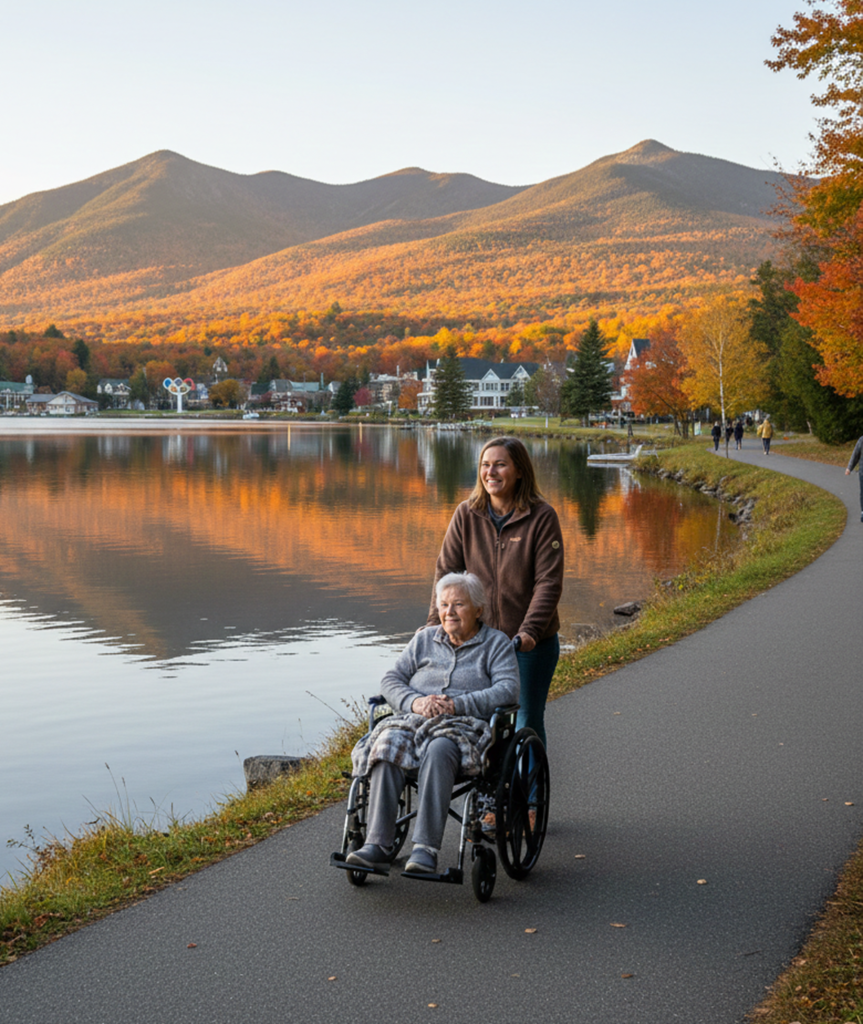
We walked along the lake, we went to the Olympic museum, we even went to the ski jump area and everything went absolutely fine. That lulled us into complacency. After our adventures, we stopped for ice cream in town. Food is a trigger for our son, he seems to think that there is a limited amount of anything.
Visiting the Olympic Museum is worth the time and easy to leave if it is too much for your special person. There are some interactive exhibits like the bobsled virtual reality.
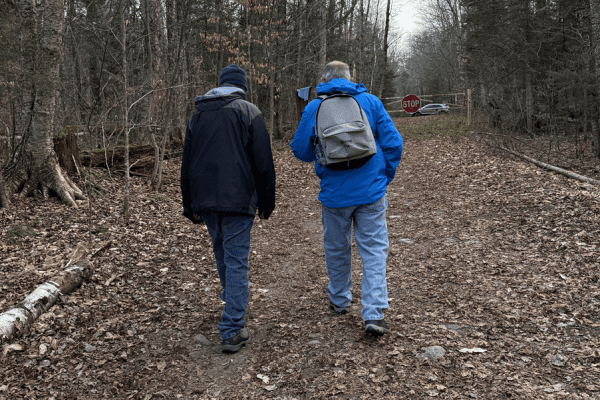
There are many hikes in the area. We did the Boundary Trail, which definitely is not accessible. The many roots crossing the path create hazards. The view of the western shore of the lake is the reward at the end of this trail.
The Olympic ski jump a few miles outside of town. There is an elevator to the very top of the lift. The views are great and there are illustrations of the peaks you will see from the top.