Speaker 2:
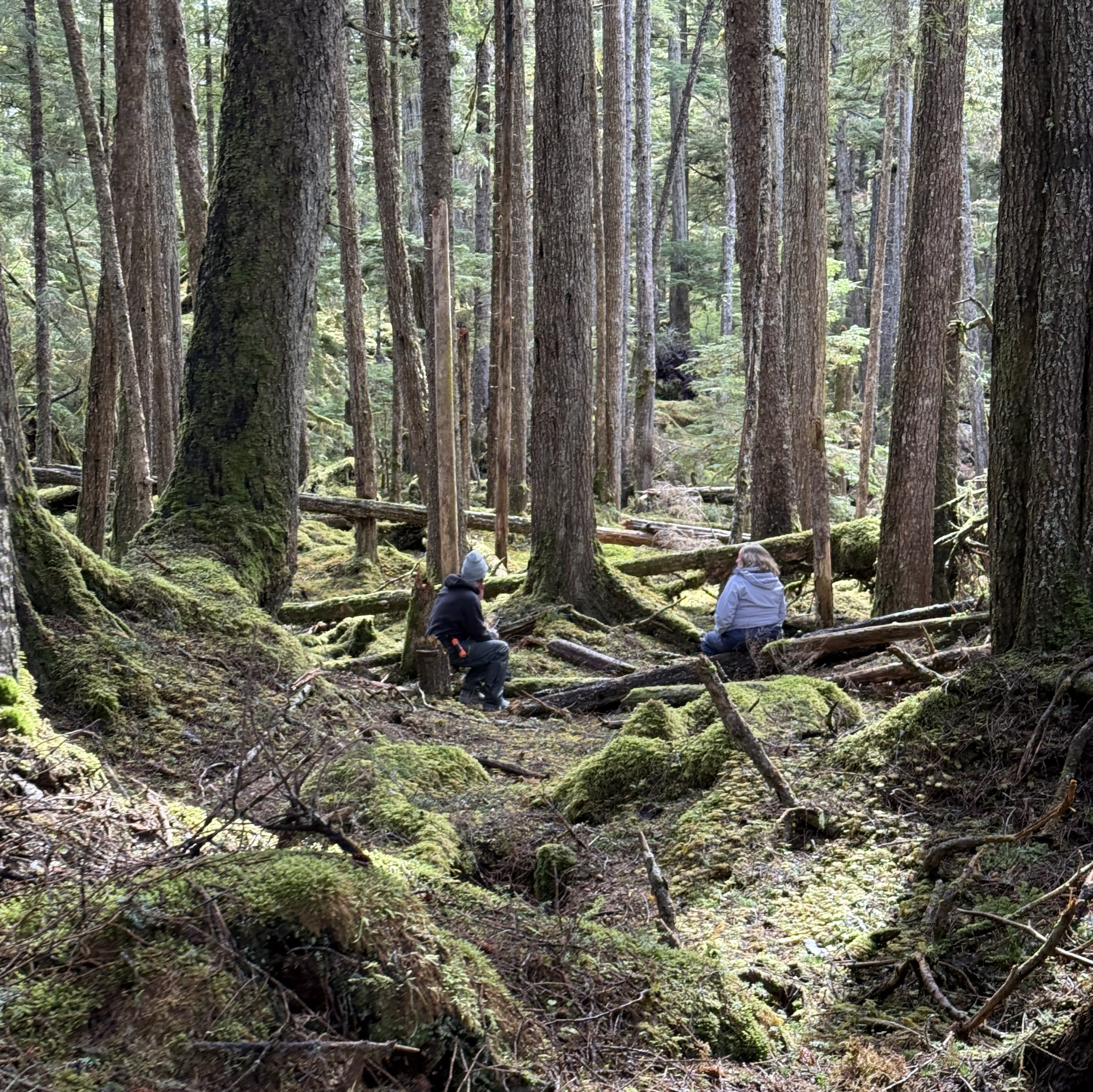
So, I want you to imagine that you are sitting on this incredibly green, mossy log in absolute silence.
Speaker 2:
Just totally off the grid.
Speaker 2:
Exactly. You are miles from cell service and you think, ah, I have completely escaped the global economy. I’m finally out of it.
Speaker 1:
Yeah, you feel totally isolated from all of that.
Speaker 2:
Right. But you are actually sitting right on top of a highly aggressive $2.2 billion commodities market.
Speaker 1:
Oh, wow. That is quite the visual.
Speaker 2:
Isn’t it? So, welcome to our deep dive into the Tongass National Forest in Southeast Alaska.
Speaker 1:
It’s an incredible topic and I’m really excited to get into the sources we have today.
Speaker 2:
Same here. But before we get into the hidden mechanics of what is happening under that moss, I really want you to try and picture the sheer scale of this place. Because, I mean, when I hear the word forest, my brain usually defaults to a nice, manageable state park.
Speaker 1:
Right. Like maybe some paved trails, a little visitor center.
Speaker 2:
Yeah, a place you can drive across in an hour, buy a postcard and go home. But the Tongass is over 16 million acres.
Speaker 1:
Which is, I mean, to put 16 million acres into a frame of reference that the human brain can actually process, you are looking at a landmass that covers roughly 80% of all of Southeast Alaska.
Speaker 2:
80%?
Speaker 1:
Yeah. It is the largest national forest in the United States by a massive margin. But it is not just, you know, a monolithic block of pine trees sitting on a flat plain.
The geography is completely splintered.
Speaker 2:
Splintered is a great way to put it.
Speaker 1:
Right. Because we are talking about an archipelago of over 1,000 individual islands and they’re separated by these incredibly deep, dark saltwater fjords.
Speaker 2:
It’s just wild.
Speaker 1:
And you have massive ancient glaciers carving their way down mountainsides directly into the ocean. The ocean literally weaves right into the heart of the timber. And crucially, this is a temperate rainforest.
Speaker 2:
Yeah. And that distinction changes everything about how the ecosystem functions. Because I think people hear the word rainforest and they automatically picture, you know, the Amazon or the Congo Basin.
Speaker 1:
Right. The tropics, sweltering heat, the jumble vibes.
Speaker 2:
Exactly. But temperate rainforests operate on entirely different biological rules and they are incredibly scarce. I mean, they make up only about 2.5% of the world’s total forest coverage.
Speaker 1:
It’s a tiny fraction.
Speaker 2:
It really is. And the Tongass happens to be one of the only temperate rainforests left on Earth that still remains largely intact and functioning just as it did thousands of years ago.
Speaker 1:
Okay, let’s unpack this. Because we have an incredible stack of source material to get through today.
Speaker 2:
We really do. Tons of ground to cover.
Speaker 1:
And the goal here is to merge two wildly different realities presented in these sources. The first reality is the boots-on-the-ground, visceral, deeply human experience of actually standing in that untouched wilderness.
Speaker 2:
The subjective experience of it.
Speaker 1:
Exactly. We have firsthand accounts, interviews with captains and conservationists, and stories of people trying to navigate a landscape that actively resists human infrastructure.
Speaker 2:
It does not want us there.
Speaker 1:
No, it doesn’t. And then the second reality is the uncompromising, high-stakes physics of global carbon cycles, climate buffering, and the incredibly intense federal policy battles over whether to log this land or just leave it alone.
Speaker 2:
Right. And I feel like the connective tissue between those two realities is how you actually get into the forest to see it in the first place.
Speaker 1:
Because you can’t just rent a car.
Speaker 2:
No. You cannot just rent a car and drive through the Tongass. Yeah.
There’s almost no road system connecting these islands. The landscape completely forbids it. So to understand this place, you have to get on the water.
Speaker 1:
You have to take a boat.
Speaker 2:
You do. And that brings us to the primary vehicle for our exploration today, which is an organization called The Boat Company.
Speaker 1:
Yeah. This is such an interesting part of the source material.
Speaker 2:
It really is.
Speaker 1:
Yeah.
Speaker 2:
Because when you start digging into the origin story of this specific ecotourism nonprofit, you uncover an absolute collision of American corporate history and modern environmental conservation. It is, frankly, the strangest family tree you could possibly imagine for an environmental group.
Speaker 1:
The lineage is completely unexpected. So Hunter McIntosh is the current owner and operator of The Boat Company. And when you trace his family history, it doesn’t lead back to, you know, a rugged Alaskan fur trapper.
Speaker 2:
Or some early 19th century naturalist writing poetry in the woods.
Speaker 1:
No. Not at all. His great-great-grandfather was actually one of the founding figures of the great Atlantic and Pacific Tea Company.
Speaker 2:
A&P. The grocery titan.
Speaker 1:
The very same.
Speaker 2:
I mean, for anyone who didn’t grow up in the era when A&P dominated, it is really hard to overstate just how massive they were.
Speaker 1:
Oh, they were behemoth.
Speaker 2:
Yeah. Before Walmart, before massive digital supply chains and barcode scanners, A&P was the undisputed king of the American retail landscape. They essentially invented the modern grocery shopping experience.
Speaker 1:
Didn’t they pioneer those loyalty programs, too?
Speaker 2:
They did. They pioneered things like S&H green stamps, which was a total cultural phenomenon. Like, you would buy your groceries, the cashier would hand you these physical little green stamps, and you would go home, literally lick them, and stick them into a booklet.
Speaker 1:
Oh, man. I remember hearing about those.
Speaker 2:
Yeah. And once you filled enough booklets, you could trade them in for a toaster or a lawnmower or a set of dishes from a catalog. It was the original loyalty program, and it built a generation-defining corporate empire.
Speaker 1:
So it was a fortune built entirely on high-volume, industrialized commerce. Exactly. But the bridge between that massive grocery empire and the remote Alaskan wilderness was Hunter’s father, Mike McIntosh.
So in the late 1940s and early 1950s, when Mike was just 18 or 19 years old, he traveled up to Alaska to work.
Speaker 2:
And he didn’t go work for an environmental group, right?
Speaker 1:
No. He worked for an A&P subsidiary known as the Waterfall Cannery.
Speaker 2:
Which was a massive operation.
Speaker 1:
It was the largest salmon fishing fleet and canning operation in the entire state of Alaska at the time. And it existed for one single purpose. It was the sole exclusive provider of canned salmon for every single A&P grocery store across the nation.
Speaker 2:
So young Mike McIntosh is out there working the fishing boats, smelling the diesel and the salt, working the loud mechanized cannery lines, and he just falls profoundly in love with the Alaskan ecosystem.
Speaker 1:
It totally captivates him.
Speaker 2:
Yeah. The imposing scale of the water and the timber just gets under his skin in a way that alters the trajectory of his entire life.
Speaker 1:
But that visceral connection laid dormant for a few decades while he built his life. Fast forward to the late 1970s and the family inheritance is being managed and distributed.
Speaker 2:
Right. The A&P fortune.
Speaker 1:
Exactly. And in most families possessing that level of generational wealth, the standard procedure is entirely predictable. You divide the assets into private trusts, you split it among the siblings, you buy some real estate and everyone just goes their separate ways.
Speaker 2:
Sure. That’s what you expect. And Mike’s siblings did go off to pursue other interests.
You know, aviation, farming, equestrian pursuits. But the family made a collective decision to create a foundation.
Speaker 1:
Which is a huge pivot.
Speaker 2:
It is. Mike took the reins of this newly formed foundation and instead of just funneling money into traditional philanthropic avenues, he focused it squarely on social justice and environmental protection.
Speaker 1:
And he took an incredibly hands-on approach. Like in 1979, Mike and his wife organized an expedition to Southeast Alaska.
Speaker 2:
But he didn’t just invite a bunch of wealthy friends for a vacation.
Speaker 1:
Oh, not at all. He brought the absolute heavyweights of the early environmental movement. I mean, the guest list on that trip reads like a roster of conservation titans.
It was on it. He brought John and Patricia Adams from the Natural Resources Defense Council, the NRDC. He brought Rick Sutherland, who was the founder of the organization we now know as Earth Justice.
He had major representatives from the Sierra Club and the Ford Foundation.
Speaker 2:
That is quite the boat ride.
Speaker 1:
Right. And Mike’s philosophy was simple, but really profound. He understood that these lawyers and activists were fighting brutal battles in courtrooms in Washington, D.C. to protect landscapes they had never actually seen.
Speaker 2:
Ah, that makes so much sense.
Speaker 1:
He knew he needed them to physically feel the scale and the fragility of the Tongass firsthand.
Speaker 2:
And the story takes this amazing turn at the end of that expedition. So they have spent a few weeks in the wilderness, and one of these major conservation leaders turns to Mike McIntosh, a man who, again, is managing a grocery fortune and has absolutely zero experience in hospitality or running a commercial maritime tourism business, and tells him, Mike, you need to start a boat business.
Speaker 1:
Just out of nowhere.
Speaker 2:
Right. And the logic driving that request was actually entirely pragmatic. The environmental groups realized they had a massive fundraising problem.
They needed a way to bring their major donors up to the Tongass to show them exactly what their donations were protecting.
Speaker 1:
Because you can’t just hand a wealthy donor a brochure and expect a massive check to save a forest they don’t understand.
Speaker 2:
Exactly. They needed a platform for total immersion. And Mike simply agrees.
He commits to the idea. In 1980, he goes out into the maritime market and buys a boat. It was a motor vessel called the Observer.
Speaker 1:
And this is where it gets crazy.
Speaker 2:
I cannot get over the staggering irony of this specific purchase. The vessel Mike McIntosh bought to launch this conservation-focused ecotourism nonprofit was previously owned and operated by Standard Oil.
Speaker 1:
Unbelievable.
Speaker 2:
Right. It was literally a vessel used by a massive fossil fuel monopoly to navigate the San Francisco Bay, taking executives out to look at industrial operations.
Speaker 1:
What’s fascinating here is how clearly this demonstrates a real world, highly functional approach to conservation.
Speaker 2:
Yeah, it’s not exactly pure, is it?
Speaker 1:
No. And the environmental movement is often criticized for demanding absolute ideological purity. If Mike had been obsessed with purity, he would have spent years trying to commission, I don’t know, a custom sailboat made from reclaimed fallen timber powered by wind and good intentions.
Speaker 2:
Which wouldn’t have worked up there.
Speaker 1:
Exactly. He needed utility. He needed a heavy, sturdy, capable steel vessel that could survive the rugged tidal currents of Alaska.
So he took a tool forged by heavy industry, a tool of fossil fuel extraction, and repurposed it for preservation.
Speaker 2:
It is brilliant leverage. I mean, you take a fortune built on a grocery monopoly, use a boat built by an oil monopoly, and use them both to save a forest.
Speaker 1:
It’s amazing. So they refit the observer, made the interior a bit more hospitable, and started bringing people up.
Speaker 2:
And initially, it was just these highly curated trips for major donors of the NRDC and the Sierra Club. But the operation proved so successful at changing minds that they eventually realized they needed to open the doors to everyday citizens.
Speaker 1:
Makes sense.
Speaker 2:
Yeah. Today, the boat company operates two small vessels, the Lizaron and the Mist Cove. They are very intimate settings, holding only about 20 to 24 guests each.
But once you have the boats and you have the guests, how do you actually run the trip? Because if you look at the broader context of Alaskan tourism, it is completely dominated by massive, rigid infrastructure.
Speaker 1:
Oh, the contrast is extreme. I mean, the standard Alaskan cruise experience involves what are essentially floating cities.
Speaker 2:
Right, the megaships.
Speaker 1:
Yeah. Megaships carrying three, four, or 5,000 passengers. These ships operate on timetables that are calculated down to the minute.
They have strict port calls, scheduled theater performances, assigned dining times. It’s a highly curated, deeply managed experience of the landscape.
Speaker 2:
You are basically experiencing the wilderness through a pane of glass on a very tight schedule.
Speaker 1:
Exactly. But in the interview with Captain Jim, who pilots the Mist Cove, he outlines a philosophy that completely dismantles that expectation.
Speaker 2:
He really does. It requires a total reset of the guest’s brain. When the interviewer asked him for a typical itinerary, his answer was incredibly blunt.
He basically said, we don’t have an itinerary.
Speaker 1:
Which is wild for a commercial trip.
Speaker 2:
If you are a traveler who is used to controlling every single variable of your vacation, paying thousands of dollars for a trip where the captain openly admits he has no idea where you are going on Tuesday must sound terrifying.
Speaker 1:
Yeah, I’d probably panic a little at first. But Captain Jim’s parameters are actually incredibly simple. He knows what day the ship leaves the dock in Juneau or Sitka on a Sunday.
And he knows what day they absolutely must return to disembark the following Saturday. Right. Every single hour in between those two points is completely fluid.
The entire journey is dictated by three unpredictable variables, the wind, the tides and the wildlife.
Speaker 2:
And that is the defining characteristic of true expedition travel. Adapting to Mother Nature isn’t viewed as a disruption of their vacation plan. Adapting to Mother Nature is the plan.
Like if the wind picks up and the water gets dangerously choppy in a specific strait they intended to cross, they don’t try to force their massive steel hull through the waves just to make a scheduled port call and keep a dinner reservation.
Speaker 1:
No, they pivot immediately. They look at the charts, find a secretive sheltered inlet like North Dot Inlet or Tats Bay, drop anchor and just explore whatever is right in front of them.
Speaker 2:
And the weather itself is a massive component of this required mental reset because the Tongass is a temperate rainforest and the operative word there is rain.
Speaker 1:
Oh yeah. Lots of it.
Speaker 2:
Captain Jim explicitly tells guests that in the Tongass, rain is not an inconvenience. It is a verb. It is an active participant in your day.
Speaker 1:
I mean, the town of Ketchikan, located in the southern part of the region, receives over 200 inches of rain annually.
Speaker 2:
200 inches?
Speaker 1:
Yeah. It rains almost every single day in some capacity.
Speaker 2:
So if you try to hide from the rain in the Tongass, you are going to spend your entire week sitting in the ship’s lounge looking out a foggy window.
Speaker 1:
Which totally defeats the purpose.
Speaker 2:
Right. The instruction to the guests is uncompromising. Put on your heavy rubber boots, zip up your waterproof gear and accept the wet.
Because the rain is the engine of the entire ecosystem. It is the lifeblood that waters the giant Sitka spruce and western hemlock trees. It fills the streams for the salmon.
Speaker 1:
And once the guests embrace that reality, the daily activities sound incredibly rich. Because the ship only holds two dozen people, the days unfold very gently.
Speaker 2:
What do they actually do all day?
Speaker 1:
Well, you might spend the morning kayaking in completely glassy, silent water. Or you might take a skiff to a rugged shore and hike through an old growth area on the Brothers Islands. The guests affectionately call one specific area Fern Gully because the ground, the rocks and every branch of the trees are completely draped in a thick, spongy, ancient green moss.
Speaker 2:
That sounds beautiful.
Speaker 1:
And then there is the fishing, which is a massive draw. The interview notes indicate that almost a majority of the passengers sign up to fish whenever the opportunity arises, regardless of their prior experience level.
Speaker 2:
Oh, really? Even people who have never fished before?
Speaker 1:
Yeah. And the crew facilitates incredibly diverse fishing experiences. They take motorized skiffs out into the deep saltwater fjords to target massive halibut and rockfish.
Speaker 2:
Nice.
Speaker 1:
Some guests are so successful they have their catch flash frozen and shipped back home to the lower 48, or they just hand it over to the ship’s chef who prepares it fresh for dinner that exact same night.
Speaker 2:
See that sounds amazing, but the freshwater fishing sounds like an entirely different level of immersion.
Speaker 1:
Oh, absolutely.
Speaker 2:
According to the sources, the crew provides you with heavy, waterproof waders. You take a skiff to the shoreline, hike inland through the dense brush, and you physically step right into the freezing clear, fast-moving streams to cast for salmon or trout. You are standing thigh-deep inside the biological arteries of the forest.
Speaker 1:
That is just incredible. And the sensory details from the audio sources are stunning, too. There is a description of taking a small skiff deep into a fjord to view Dawes Glacier.
Speaker 2:
Oh, right. The glacier calving.
Speaker 1:
Yeah. You aren’t just looking at it from miles away. The skiff has to physically weave and dodge through a minefield of floating icebergs just to get close to the face of the glacier.
Wow. And the visual descriptions of the Glacial S are striking. The sources talk about sections of the glacier that look exactly like stained-glass blue windows right before the pressure causes them to fracture.
Speaker 2:
That must be surreal to see in person.
Speaker 1:
Seriously. The physical experience of sitting in a tiny skiff, waiting in the freezing mist, watching a towering wall of ice that is hundreds of feet tall, and anticipating the moment a building-sized chunk of crystal-clear or dense white ice cracks off and plunges into the water. The calving process.
It must be a profound recalibration of the human senses.
Speaker 2:
I can’t even imagine the sound of that.
Speaker 1:
Right. You are forced to notice the way the clouds curl around a specific mountain peak, or the exact acoustic crack of the ice echoing off the rock walls.
Speaker 2:
It’s a beautiful picture, but I want to stop and look at the structural reality of accessing this environment, because getting out into that rugged landscape presents a very real physical challenge, particularly regarding accessibility for travelers with disabilities.
Speaker 1:
This is a really important point.
Speaker 2:
Yeah. The interviewer in our source material actually has low vision and uses walking sticks to navigate, so she brought this issue up directly with Hunter McIntosh. And the structural barrier begins with the boats themselves, because the boat company operates commercial marine vessels, and as such, they are strictly bound by Coast Guard SOLA’s regulations.
Speaker 1:
Right. And SOLA stands for Safety of Life at Sea. It is a comprehensive, non-negotiable international maritime treaty.
It dictates the fundamental safety architecture, engineering, and emergency protocols of all commercial ships.
Speaker 2:
So what does that mean for accessibility?
Speaker 1:
Well, one of the most rigid requirements of SOLAs is the mandatory presence of high, water-tight bulkheads on the doors and thresholds throughout the lower decks of the vessel.
Speaker 2:
Let me make sure I understand the physics of that. If the hull of the ship is breached by a rock or a submerged log, these bulkheads are basically the raised steel lips at the bottom of a doorway that allow you to seal a heavy steel door shut, right?
Speaker 1:
Exactly. They prevent catastrophic flooding from spreading from one compartment to the next. You basically sacrifice a hallway to save the ship.
Speaker 2:
Got it.
Speaker 1:
They are life-saving architectural necessities. But those very same bulkheads create an immediate, insurmountable accessibility barrier. You cannot easily roll a wheelchair over a 6-inch or 8-inch raised steel threshold.
Speaker 2:
Right. That would be incredibly difficult.
Speaker 1:
So because of these maritime safety laws, the ships are physically incapable of meeting strict ADA Americans with Disabilities Act architectural compliance. A wheelchair user would find it nearly impossible to board the vessel, navigate the narrow interior corridors, or access the bathrooms independently.
Speaker 2:
So if the architecture of the ship is legally fixed and inherently exclusionary, how does the company actually accommodate guests with mobility issues or visual impairments? Because the interviewer asked Hunter McIntosh if his crew undergoes specialized formal disability compliance training to handle these challenges.
Speaker 1:
And his answer was remarkably candid.
Speaker 2:
It really was. He explicitly stated that they do not run formal disability training seminars. Instead, he said his entire philosophy is focused intensely on hiring, quote, good human beings.
Speaker 1:
Now, on the surface, that sounds a bit evasive. It sounds like corporate speak for, we don’t have a policy. But when the interviewer details how that philosophy actually plays out on the deck of the ship, you realize it is a deeply intentional, highly effective approach to hospitality.
They are actively compensating for an architectural lack with an overabundance of human awareness, patience, and direct physical assistance.
Speaker 2:
Yeah, the interviewer detailed exactly what that looks like in practice. She noted that whenever she’s trying to get in or out of the wobbly motorized skiffs, which, by the way, is difficult even with perfect vision and balance, she is always greeted with what the crew calls the sailor’s handshake.
Speaker 1:
I love that detail.
Speaker 2:
It’s so good. The crew members don’t hover over her nervously. They don’t awkwardly grab her arms or try to lift her.
And they certainly don’t rush her. They simply slow down the entire boarding process, assess her footing, lock forearms in a firm, steady grip, and physically bridge the gap between the swaying dock and the moving boat.
Speaker 1:
And they implement practical, logistical adaptations wherever possible without making a spectacle of it. For guests who use CPAP machines to manage sleep apnea, the crew ensures there is an abundant supply of distilled water waiting in the cabin.
Speaker 2:
Which they make right on the ship, right?
Speaker 1:
Yeah, it’s generated on board by the ship’s water makers. And for older guests who use folding walkers and can manage to step over the thresholds with a little assistance, the crew strategically assigns them cabins on the main deck. This avoids the steep, narrow internal staircases entirely and places them immediately adjacent to walk-in showers.
Speaker 2:
It’s just very thoughtful. But the moment that really solidified this entire philosophy for me was the deeply personal story the interviewer shared about trying to hike the Moss Gully Trail on the Brothers Islands.
Speaker 1:
Oh, the story’s so good.
Speaker 2:
It really is. So this is that beautiful, ancient area covered in thick moss we mentioned earlier. And because she has low vision and lacks depth perception, the terrain quickly became dangerous for her.
There were hidden roots, slick, fallen logs, uneven ground, and the flat lighting under the canopy meant she simply couldn’t tell if the path was sloping up or dropping off.
Speaker 1:
That sounds really disorienting.
Speaker 2:
Yeah, and recognizing her physical limits, she just stopped walking on the trail.
Speaker 1:
Now, in almost any standard group tour dynamic, a guest stopping unexpectedly creates immediate friction. The guest feels like a burden, holding everyone back. The guide feels immense pressure to rush the guest along to keep the group on their rigid schedule, or awkwardly tries to force them to complete a hike they aren’t comfortable with.
Speaker 2:
But remember the anti-schedule. There is no rigid itinerary, which means there is no rush. Instead of pressuring her, a young crew member named Andrew simply stopped with her.
He told the rest of the group to hike on ahead and enjoy the trail. And Andrew just sat down right next to her on a damp, mossy log.
Speaker 1:
And they didn’t just sit there in awkward silence, waiting for the group to return.
Speaker 2:
Not at all. They spent the time talking about their lives, sharing stories, solving the problems of the world, completely surrounded by the dense quiet of the ancient forest. She told the interviewer that sitting on that wet moss with Andrew felt as safe and comfortable as sitting on her own living room couch.
Speaker 1:
It is a really moving anecdote because it offers such a profound lesson in environmental hospitality. By completely removing the anxiety of the environment, by offering genuine human patience and companionship rather than architectural solutions, Andrew bridged the gap.
Speaker 2:
You really did.
Speaker 1:
He didn’t try to force her to conquer the trail. He allowed her to experience the magnitude of the Tongass exactly where she was, on her own terms.
Transcribed by TurboScribe.