Disclosure:This article may include affiliate links, and some items or experiences may have been provided for review or media access. We may earn a small commission if you use these links.
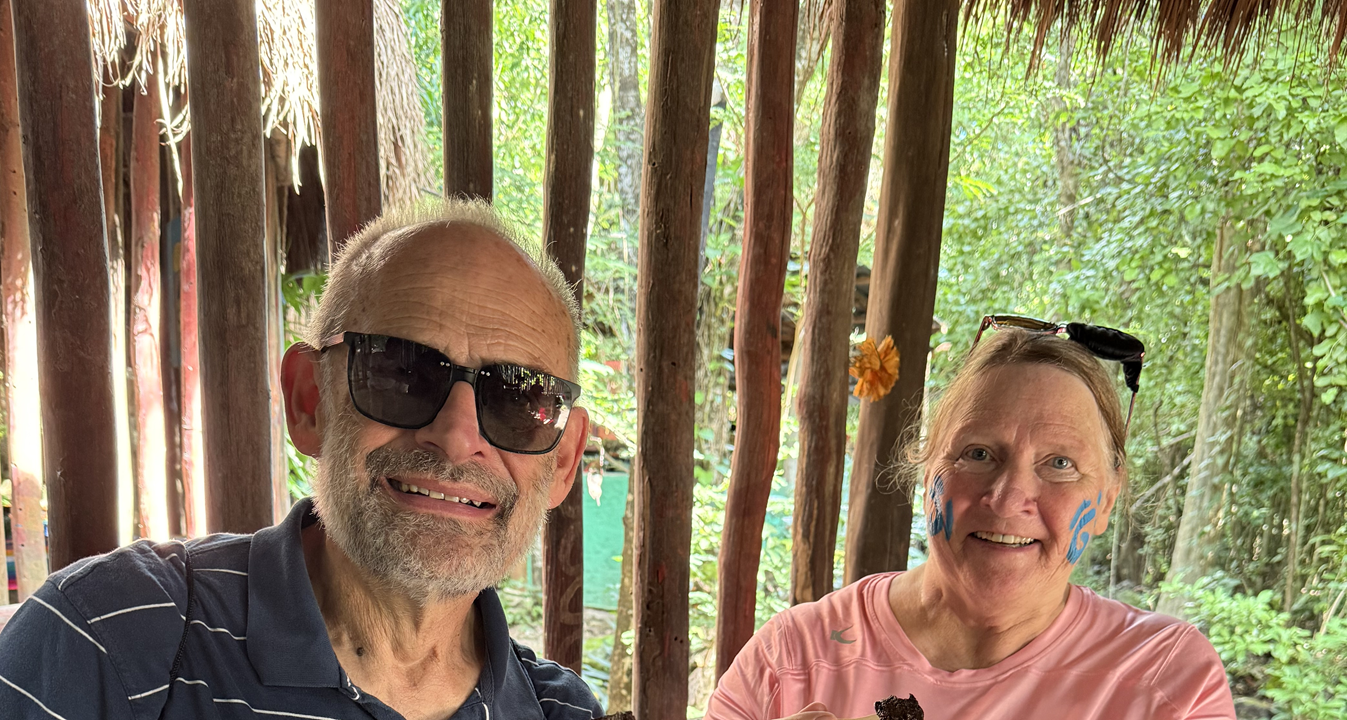
About Living the Could Life
About this Episode:
This episode introduces who we are, why we created Living the Could Life, and why we are here. If you’ve suddenly found that your body’s performance doesn’t sync with your mental attitude, you have come to the right place. Navigating disability, chronic illness, aging, or any kind of life change was not in your plans? Join us.
This is basically an introduction to us and what we hope to share in upcoming episodes.
Transcript
Click Here for Transcript
Theresa:
Welcome to the very first episode of Living the Could Life. I’m Theresa. If you’re here, you’re probably someone who’s had to adapt your life several times, maybe by choice, maybe not, or maybe you’re still figuring out what the next chapter looks like.Either way, you are in the right place.
Robert:
And I’m Robert, your co-host, the guy who scopes out the area, takes photos of inaccessible places, and who’s trying hard to earn his seeing-eye guy vest. Yep, you sure are.
Theresa:
You should have your vest really soon. You’re getting really good at this. The show isn’t about pretending everything is fine, easy, or trivial.
It’s all about adaptation. It’s about the difference between what travel should look like, no pun intended, and what it could look like now. Don’t expect any toxic positivity from us.
We are here to support each other, be realistic, and share ideas. And since this is our first full episode, we want to start with the heart of the brand, where this idea came from, what it means, and why we’re choosing to tell these stories now. By the way, we should tell you a bit more about ourselves.
I’m Theresa, a travel writer who, in later life, suffered NAION, also known as Non-Arteritic Anterior Ischemic Optical Neuropathy. Basically, it’s a stroke of the eye, and I started with that happening in my right eye. But did you know you can still be fairly independent with one well-functioning eye? It took a bit of adaptation, but I did okay for several years, until one day, the vision in the other eye rebelled.
Maybe it thought it was being overworked. There was just a 20% chance of the same thing happening in my good eye, the left eye, and I never expected it to happen twice. I had no pre-existing condition that made me a candidate for it in the first place. But that second eye has a blurred tiny crescent moon area. So now, what was my good eye is now my bad eye, and vice versa.
I didn’t see that coming. Although I lost my independence, my ability to drive, and the ability to do many things that I took for granted, my condition is considered an impairment rather than a disability. Not sure who decides on that classification.
It’s obviously somebody without this impairment.
Robert:
I’m Robert, a former high school math teacher, now enrolled in the Seeing Eye Guy certification program. I even have a business card for proof of that.
I never expected to be a caregiver so soon after my early retirement due to how COVID had changed teaching. We both enjoy travel, and now I have suddenly started noticing things that I never really paid attention to before. Like finding escalators and elevators, looking for trip hazards, and such.
Theresa:
Likewise. The idea of this podcast started spinning in our brains when we realized that we really hadn’t seen much information about dealing with body changes that affect us later in life. For me, travel, something that always had meant freedom, joy, escape, independence, escape, and independence, suddenly became complicated.
I often traveled solo in the past. I was accountable only to myself. I didn’t have to do a lot of planning, and I wasn’t the default tour guide.
I was independent. And I was there thinking, okay, so what now? What could this look like? Not what it should look like. Not what it used to look like.
Just what’s possible from here. I was definitely not ready to give up travel, even though for a brief moment, a very brief moment, I considered lying on the couch with Robert waving palm fronds above me, and me drinking wine while eating bonbons. I don’t think you would really do that.
Robert:
It’s not really in your nature.
Theresa:
Well, nature’s changed. Travel memories flashed before me.
We had bicycled several times around New Zealand, in Mexico, and even did a transcontinental tour from the Pacific Ocean to the Atlantic Ocean. We hiked the Inca Trail. We took many adventurous trips.
We camped. We did day trips. And now, my big adventurous trip is walking from the front door down the staircase to the car.
And this was another incentive that made us think that Living the Could Life was important to not only us, but to many others. Giving up travel by somebody like me with a dominant gene and wanderlust would be incredibly harsh. There had to be alternatives.
Robert:
And that’s something we’re to talk about a lot here. Alternatives, adaptations, possibilities, grief, loss, and more. One of the themes you’ll hear again and again on this show is adaptation, especially when it happens later in life.
Theresa:
Because it’s one thing to have lived and adapted to challenges from birth, but when they come on later in life, it’s far more difficult to teach an old dog new tricks.
Robert:
And earning points towards my Seeing Eye Guy accreditation isn’t easy either. And we do want to include caregivers in this conversation, whoever thought they would spend their golden years as a golden retriever.
Theresa:
But seriously, without help, it would be extremely difficult to adapt. I know there would be fewer things that I could do. I also don’t want to become a burden.
I’m lucky to have help. And I realize not all people are so fortunate.
Robert:
And the people we’ll talk to on this show vary from people who share their stories to experts and helping folks regain their independence by making adjustments.
There are definitely resources out there and we’ll help you navigate them. And the truth is, reinvention isn’t glamorous. It’s slow. It’s emotional. It’s practical. It’s annoying.
Theresa:
It’s scary. It’s messy. And messy definitely describes me. Knocking things over. Tripping and knocking other people’s things over. Spilling. Miscalculating where things are. It’s a bit of an embarrassment.
We’ll be right back.
Theresa:
I think everyone has a moment when they surprise themselves. When they do something they didn’t think they could do anymore.
Robert:
For you, it was that first trip after everything changed.
Theresa:
Oh, that’s for sure. I had planned a trip to Alaska prior to having lost the vision and the second eye. But Alaska is one of my favorite destinations.
And I just assumed, sure, I can do this. No big deal. I’ve traveled before. I’ve been to Alaska before. I’ve flown before. I’ve navigated airports.
Well, when I arrived at Chicago O’Hare and looked at the departure flight board, there was so much glare. It was a bright sunny day that I couldn’t even see what I was looking for. But fortunately, I had the app on my phone.
So I just looked at that and headed down the concourse, bumping into lost people and almost tripping over those little teeny tiny roll-aboards that are trip hazards for anybody.
Robert:
And I didn’t expect to become a caretaker. I didn’t expect to be the person who notices curbs, lighting, seating, and pacing. But I did it. And I found a meaning in it and the importance of doing it.
Theresa:
And that’s the thing about this process.
It doesn’t just happen to one person. It happens to everyone around them. And that is where feeling like a burden comes into play, but also why we are including caretakers.
Robert:
Let’s talk about the difference between could and should, because that’s the crux of this whole thing.
Theresa:
Should is heavy. It’s judgment. It’s obligation. It’s expectation. It’s the voice that says you are failing. It’s also regret.
Robert:
Could is possibility, curiosity, permission. It’s the voice that says let’s see what’s still available.
Theresa:
And when you’re navigating body changes, aging, grief, or any other major life shift, should becomes a trap that sets you up for failure. But could becomes a way out.
Robert:
A path that might look different than you expected, but still leads somewhere meaningful.
Theresa:
And that’s what we’re exploring here. Not the life you should have, but the life you could have. When your life changes, your world changes with it, and you see things differently.
You move differently. You plan differently. You notice things you never noticed before.
Robert:
And sometimes that’s scary. And sometimes it’s clarifying. Sometimes it’s both.
Theresa:
We’ll talk about both of those on this show. The emotional side of adaptation. The grief.
The humor. The awkwardness. The messiness.
The unexpected joy in accomplishing small tasks.
Robert:And the way travel becomes a mirror. When you slow down, you see more.
When you ask for help, you connect more. When you adapt, you learn more.
Theresa:
And sometimes you see the world differently because you are walking with somebody who also sees it differently.
Robert:
And that’s us. Two vantage points. One shared journey.
Theresa:
And that’s what we’d like our listeners to feel. That we’re walking with them, and you are walking with us. Seeing the world through two sets of eyes and two different experiences.
Travel’s a big part of this podcast. Not in a glossy influencer way. We’re not here to sell perfection.
Robert:
We’re here to talk about real travel. Adaptive travel. Imperfect travel.
Travel that requires planning and patience and understanding limitations.
Theresa:
And speaking of limitations, that’s one of the hardest parts of having a new disability. Being overconfident always, well, maybe not always, but often gets me into trouble.
Robert:
Definitely!
Theresa:
But here’s the truth. Limitations don’t necessarily close off your world. They just send you through a different door. They force you to travel with intention and mindfulness. It’s a different type of intention and mindfulness.
We’ve always traveled that way, but now it’s a very basic type of intention and mindfulness. Like mind the gap. Find a hotel with elevators. Find a hotel with showers instead of a bathtub.
Robert:
And for you, doing it with new eyes. Others may do it with new hips or new balance, digestive issues, or a variety of other changes to their bodies.
Theresa:
Travel becomes more exact. It requires a lot more planning, but it still exists just in a different way. I still could.
Robert:
And that’s what we want this show to be. A reminder that movement is still possible, even if it looks different now.
Theresa:
So what can you expect from this podcast? Stories, conversations, honest reflections, moments of humor, moments of vulnerability, and a talk about what life could look like now.
Robert:
We’ll talk about travel, yes, but also identity, aging, disability, caregiving, reinvention, relationships, and the small surprising moments that make life feel possible again.
Theresa:
This is not a show about pretending everything is fine. It’s a show about finding possibility in the middle of the mess.
Living the Could Life is unposed, unscripted, and unedited.
Robert:
And we’re glad you’re here with us.
Theresa:
Next time, we’ll be discussing the two definitions of could.
There have been some studies done. There’s a lot of information that we’d like to share. And until next time, keep traveling in whatever way your life allows.
Be sure to visit our website at www.livingthecouldlife.com. You can find show notes there and other stories on the website.
Robert and Theresa:
This is Living the Could Life.
Show Notes
Music
Opening Theme“Carpe Diem” by Kevin MacLeodLicensed under Creative Commons: Attribution 4.0http://creativecommons.org/licenses/by/4.0/Source: incompetech.com
Interlude:
"Ascending the Vale" Kevin MacLeod (incompetech.com)
Licensed under Creative Commons: By Attribution 4.0 License
http://creativecommons.org/licenses/by/4.0/Closing Theme“Bloom” via PixabayCC0 License (No attribution required)Source: pixabay.com/music
Living The Could Life – A 70-Day Workbook For Living Well After Body Change